
February 24, 2026
Ireland’s Commission for the Regulation of Utilities (CRU) ended four years of ambiguity on data centre grid connections with its December 2025 Decision Paper on the Large Energy User Connection Policy. It establishes a tiered connection framework for new data centres, segmenting projects by maximum import capacity: <1 MVA, 1–10 MVA, and >10 MVA. Given Ireland’s hyperscale history, the >10 MVA tier will determine market outcomes.
For >10 MVA schemes, feasibility now rests on three codified obligations:
- Proximate/behind‑the‑meter generation sized to 100% of the grid connection;
- Siting in “unconstrained locations of the grid”; and
- 80% of annual electricity demand matched by renewable energy investments in Ireland.
There is no demand‑curtailment requirement. The CRU has converted operational uncertainty into front‑end, testable design conditions that can be engineered, contracted, and financed.
In 2021, as data centre consumption moved toward ~20% of Ireland’s total metered electricity, the CRU issued guidance to protect network stability. It directed system operators (SOs) toward stringent locational rules, dispatchable/on‑site generation expectations, and demand‑side flexibility. In practice, the combination of stringency and persistent uncertainty functioned as a de‑facto moratorium. Since that point, only one project receiving a post‑moratorium offer – EdgeConneX DUB04 & DUB05 – has come online. The new Decision Paper does not open the floodgates; it reopens a path under stricter siting and self‑supply discipline.
Design Obligations for >10 MVA: What Must Now Be Proven
The framework shifts the locus of risk from system operations to project design:
- Locational eligibility: Projects must target unconstrained grid locations, redirecting development away from congested nodes.
- Self‑supply parity: 1:1 proximate generation forces reliability to be internalised at the project level.
- Renewables matching (80% annual, in‑country): Demand growth is tethered to domestic clean‑energy investment, rather than generic or offshore instruments.
By excluding curtailment, the policy favours deterministic compliance levers (siting, generation, contracting) over operational volatility.
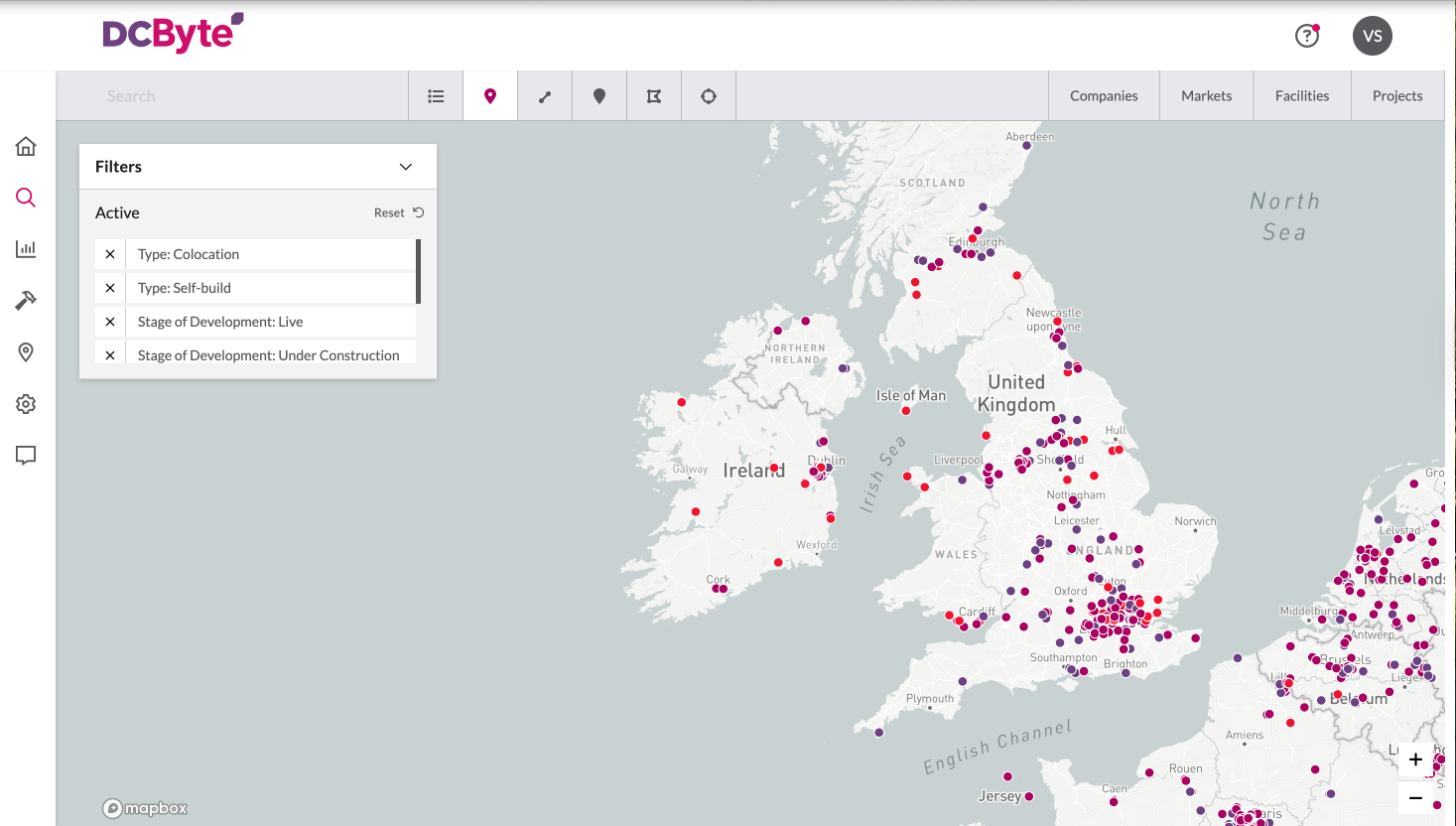
Site value is now a function of grid headroom. The Greater Dublin Area (GDA) remains the highest‑demand ecosystem, but it is also where constraints are most acute. With the CRU’s emphasis on unconstrained locations, relative attractiveness migrates to nodes where the system can absorb new load. That re‑weights land values, access rights, and development sequencing. The implication is straightforward: proximity to demand is no longer decisive if the grid cannot support timely conversion.
For >10 MVA projects, the capital plan expands from a single facility to a paired build: the data centre and co‑located generation of equal scale to the grid connection. Programme governance must integrate both EPC scopes on a convergent schedule. The gating risk shifts from speculative curtailment to achieving simultaneous readiness of compute and generation assets. Procurement, O&M planning, and contracting must reflect this dual‑critical‑path reality.
Renewables Matching: Annual, In‑Country, and Verifiable
The 80% requirement is tied to actual annual electricity demand and must be met with renewable investments in Ireland. This singular condition elevates contract structure, metering, and verification from back‑office compliance to front‑of‑house bankability. Generic certificate accumulation loses value where it cannot be clearly attributed to in‑country generation against annual usage.
Despite policy clarity, supply‑side realities persist. The grid remains constrained, particularly in the GDA. New allocations are not likely to come online until at least 2027, and that presumes rapid handling of a significant grid‑connection backlog. Planning backlogs add further delay. These procedural frictions mean the Decision Paper improves predictability, not speed. Portfolios must be re‑timed around a 2027+ conversion cadence.
The 1:1 parity rule makes dispatchable proximate generation a logical route. However, concerns over available capacity in Ireland’s gas network complicate the development of large new gas‑fired plants. Strategies that assume gas‑based self‑generation as the fastest path must be underwritten by evidence on fuel availability and connection timing, not by assumptions about system relief. Where that evidence cannot be produced, the case is not bankable.
Decision Logic Reset:
- Dublin‑first as default → Grid headroom first.
Valuation and prioritisation must pivot to unconstrained locations, even where enterprise clustering is weaker. - Grid‑only suffices → Self‑supply is core scope.
The project perimeter now includes acquiring, delivering, and operating proximate generation at parity with the import capacity. - Policy clarity brings 2026 throughput → Backlogs dictate 2027+.
Conversion timing depends on connection and planning queues, not on the presence of a decision document. - Gas self‑gen is quickest → Fuel‑system limits decide speed.
Any gas‑linked plan requires hard, auditable proof on gas network capacity and sequencing.
Stakeholder Implications: Behind‑the‑Meter Parity as the Unifying Constraint
Operators
Scope expands to encompass generation EPC, plant operations and maintenance, and, where relevant, fuel logistics. Programme governance must be retooled for dual‑asset synchronisation. The decisive execution question becomes “can we commission both assets together and demonstrate compliance on day one?”
Investors
Underwriting pivots from demand curves to deliverability under policy. The credit case strengthens where sponsors can evidence locational eligibility, self‑supply readiness, and in‑country renewables matching. Equity cheques grow to accommodate generation capex; debt improves where obligations are measurable, monitorable, and enforceable.
Suppliers & Developers
Suppliers positioned for proximate generation gain relevance. Yet any strategy anchored in large gas‑fired capacity must reconcile gas network constraints and planning timelines. Development management becomes dual‑track (plant + data centre), aligned with SO policy updates and local authority calendars. Winning proposals will be bankable against the Decision Paper’s tests, not simply cost‑competitive.
Advisors
Advisory value concentrates in grid‑topology analytics, fuel‑system feasibility, and renewables‑instrument design that satisfies the 80% in‑Ireland, annual requirement. The job is to translate policy text into a sequenced, financeable plan that survives planning and interconnection friction.
The immediate procedural step is for the system operators to update their policies and publish a dedicated connection process by 31 March 2026. This should remove residual process ambiguity – —application handling, queue mechanics, and documentary requirements. It will not, by itself, expand headroom where constraints are binding. As SO policies land, the market will clear through a simple screen: unconstrained location plus verifiable self‑supply and renewables matching at final investment decision.
Dublin: The Outlier Clarifying the Constraint Narrative
Dublin remains the definitive case study for constraint-reshaped behavior. As a market dominated by hyperscale self-builds, it illustrates how grid uncertainty forces more decisive, upstream commitments. In an environment of extended timelines, delivery sequencing becomes a high-stakes exercise in risk management, fundamentally altering the traditional operating model.
What to Reassess Now
- Reorder portfolios by deliverability, not adjacency. Prioritise unconstrained locations and generation feasibility ahead of Dublin proximity.
- Capitalise for a paired build. Treat proximate generation as non‑optional for >10 MVA and model a heavier capex profile with dual critical paths.
- Evidence fuel and planning reality. Gas‑linked routes require hard proof on network capacity and sequencing; assumptions do not clear credit committees.
- Adopt a 2027+ cadence. Align investment gates, EPC mobilisation, and offtake discussions to a realistic allocation horizon.
- Engineer renewables compliance. Structure instruments to meet the 80% in‑country, annual rule exactly as written.

“Ireland hasn’t eased the bar; it has made the bar measurable. The winners will be the first to turn location and self‑supply into bankable delivery, not the ones with the loudest pipeline.”- Charlie Enright, Senior Analyst – Nordics, UK and Ireland
DC Byte tracks facility‑level capacity, connection applications, and deliverability signals across Ireland. If you need a deliverability‑first view, unconstrained grid areas, and proximate‑generation feasibility, our analyst team can walk you through the evidence.
To pressure‑test your Ireland portfolio against the Decision Paper’s thresholds, request a focused analyst session. We will map siting options, generation‑pairing pathways, and renewables‑matching structures to your timeline so you can decide what to advance, defer, or exit ahead of 2027.
If your planning depends on separating announced capacity from deliverable capacity, you need better visibility on data centre markets, not bigger bets. Book a demo with our team to explore our Market Analytics, where we capture global data centre capacity by market and development stage.
Related Posts







































































































BOOK A DEMO
Discover the Global Data Center Landscape
Join industry leaders using DC Byte to track infrastructure across 135+ countries.