If one theme defined London’s Data Centre World (DCW) 2026 it was the risks facing stakeholders across the sector in 2026 and beyond. These risks vary from the geopolitical to technology obsolescence to continuing power and land constraints in Tier 1 markets. Here’s a brief summary of each with thoughts and insight from our analysts.

Power Remains the Biggest Limiting Factor
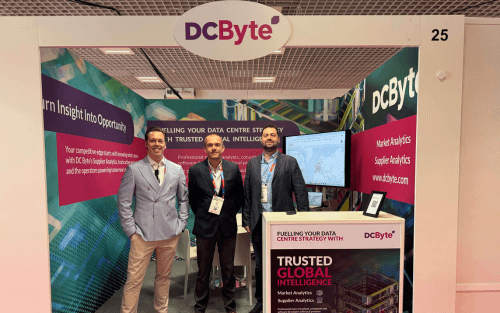
Whereas previous editions of DCW focused heavily on early-stage developments, there was a marked shift in emphasis this year. Many of the presentations cited power and land limitations as reasons for caution on the delivery of new developments. However, other concerns are also gaining prominence, as Scott Roots, Sales Director EMEA at DC Byte (who also hosted a very well-received talk at the event) explained,

“Power is still the number one limiting factor, however there is also concern around upcoming government legislation and whether that could also bring in new restrictions. We’re also seeing increasing concern around lead times for critical data centre components, not helped by current geopolitical disruption to supply chains.”
AI Workloads are Driving Major Infrastructure Shifts
Continuing with the theme of AI workloads, a key talking point at DCW was how this is driving innovation across the sector. AI workloads are leading to data centres becoming denser and more capital efficient, better at reusing heat, and more reliable. DC Byte Senior Research Analyst Rithika Thomas explained,
 ““AI Workloads are driving innovation in power, heat and scale with 1MW server racks, cluster-based designs, and increasing adoption of hybrid cooling solutions.”
The Over vs Under-Engineering Balance
Both investors and operators are facing a difficult choice. On the one hand, the rate of innovation, largely but not exclusively driven by AI workloads, means anything state-of-the-art being built today risks becoming obsolete relatively quickly. However, on the other, keeping costs down by under-engineering data centre builds risks not meeting the demands of an occupier-led marketplace. As DC Byte Research Anaylst Devika Shah said,

“Operators face a real dilemma. Do they build for dedicated AI facilities to anticipate demand or build flexible facilities that could be adapted for AI in the future, which will prove more costly in the long run?”
Data Sovereignty is Becoming Increasingly Important
The regulatory push for data sovereignty and sustainability throughout Europe is shaping deployment strategies across the continent. Regulatory changes (and apprehension about upcoming legislation) are encouraging partnerships with local operators, decentralised data centre network models, and a greater focus on heat reuse and community buy in. As DC Byte’s Research Analyst Natasha Hammond noted,
 “Issues around data sovereignty are becoming a growing concern. Regional players across EMEA are increasingly focusing their efforts on domestic data centres.”
Looking Ahead
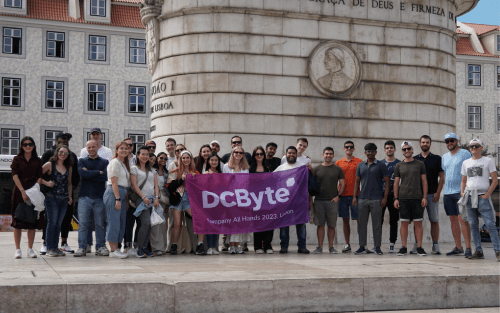
Overall, our visit to DCW was a fruitful one, as the team engaged with the EMEA’s top developers, operators, and suppliers. It was a reminder of how data drives collaboration, insight, and real-world outcomes across the industry.
Want to know more?
For more market insights, explore our recent research on the region:
- Market Infographics for Norway, Stockholm, and Copenhagen
- Our Mediterranean Sea Markets Market Spotlight
- The Hyperscale Build Race
As markets mature and new growth corridors emerge, data transparency is no longer optional. It is the foundation of competitive advantage.
Ready to see how DC Byte’s analytics platform can help your team identify opportunities earlier and plan with confidence? Contact us below!