
April 17, 2026
Building a data center in the United States has always been a location game. That hasn’t changed, exactly, but it is no longer the whole story. Increasingly, the harder question is not where to build, but how to power it.
As grid connection timelines stretch and demand continues to accelerate, behind-the-meter power is moving from a workaround to strategic necessity. For operators, investors, and hyperscalers alike, it is becoming one of the key determinants in which projects are realistic, which are delayed and which may never materialize at all.
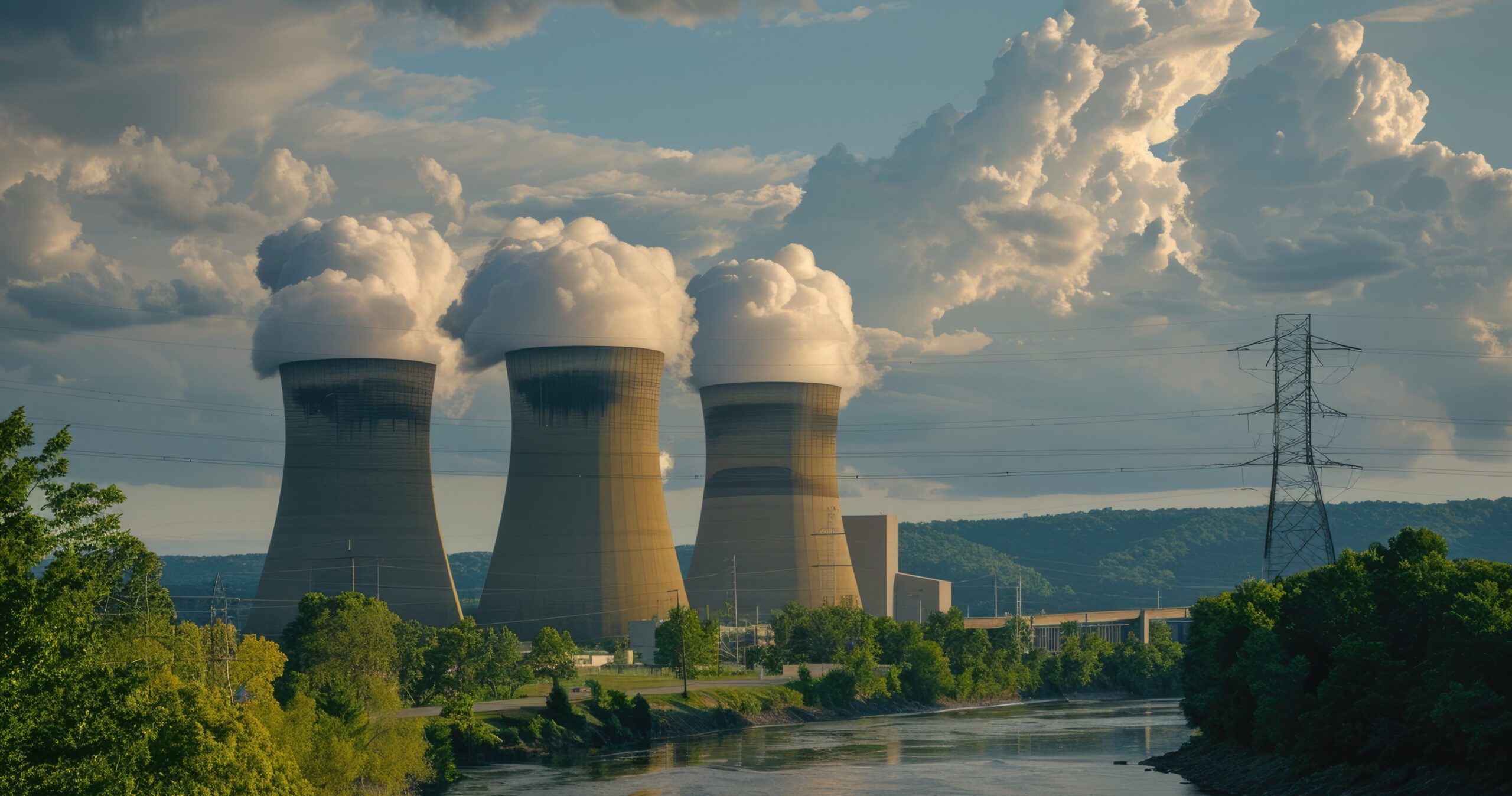
What is BTM power?
BTM power is any generation source physically located on or near a data center site, used to run the facility. It’s referred to as “behind the meter” because it bypasses or supplements traditional grid connections. The distinction matters. A conventional utility contract leaves the operator largely dependent on grid availability, interconnection queues and regional transmission constraints. A behind-the-meter setup does not remove complexity entirely, but it does give developers another route to capacity when the grid is too slow, too congested or too uncertain.
What’s Driving the Shift to BTM Power?
Grid interconnection delays: Grid interconnection timelines across the United States are severely stretched. In some markets, wait times are now expected to last up to 7 years. This means that for many operators, even if they can build-out a site relatively quickly, bringing it online can take years. When coupled with ever accelerating demand, this has created a real chokepoint for operators across the country. As a result, most have little choice but to look at alternative means of powering projects.
Transmission constraints: Operators aren’t just facing lengthy wait times for grid connections. Even when they can secure a place in the queue, they’re often faced with expensive upfront costs in high-demand areas. Transmission congestion has caused significant price differences across regions, with key markets like Northern Virginia, Phoenix, Dallas and Chicago subject to huge interconnection pressure. BTM Power offers a way around these constraints, along with resilience against supply issues like the increased potential for outages when grid capacity is overwhelmed.
Hyperscaler demand: Hyperscaler demand continues to grow in scale and urgency, pushing campus requirements into the 100–500+ MW range. Hyperscalers such as Amazon Web Services, Microsoft, and Google are prioritizing speed-to-market and power certainty. Utility providers often cannot guarantee this within required timelines, making on-site or hybrid power solutions increasingly attractive.
The Main Technologies Shaping Behind-the-Meter Adoption
Natural Gas: Of the power generation options open to operators, natural gas bridging is proving the most popular in the immediate term. In most U.S. markets, it’s quicker to purchase and deploy turbines and reciprocating engines, than it is to queue for a utility connection or substation upgrade. This is particularly true of “hot” markets like Texas and Northern Virgina that also have access to an abundance of natural gas.
 As Alexandra Desseyn, DC Byte’s Americas Research Manager notes, “developers are turning primarily to natural gas generation as a scalable, dispatchable near-term solution, often complemented by renewables and battery storage to address sustainability goals. While nuclear (particularly SMRs) and hydrogen remain longer-term considerations, the current market reality is that BTM solutions are being deployed to bypass grid bottlenecks, ensure reliable capacity, and align with both development timelines and evolving decarbonization objectives.”
Colocated power plants: Colocated power plants are a rarer form of BTM generation due to cost, the scarcity of existing power assets available to operators, and the constraints and timescales associated with converting often decommissioned or dated sites. However, those hyperscalers with the means to pursue power colocation projects are doing so. One high–profile example is the nuclear plant at Three Mile Island in Pennsylvania. Constellation Energy plans to reopen this plant to supply carbon-free power specifically to Microsoft data centers. Another is AWS’ purchase of a data center campus directly connected to Susquehanna Steam Electric Station, a 2,476 MW nuclear plant in Pennsylvania. Nevertheless, this remains a longer-term solution at present.
Fuel cells: Fuel cells are also playing a larger role in BTM deployments. By converting natural gas or hydrogen into electricity without combustion, they offer a lower-emissions option that can be deployed relatively quickly. Equinix’s partnership with Bloom Energy is a useful example. Through that relationship, Equinix has deployed solid oxide fuel cells at 19 U.S. data centers, creating more than 100 MW of capacity.
Solar plus storage & renewables: Solar-plus-storage and other 100% renewable solutions are increasingly being used for BTM configurations outside the U.S., where operators often need to comply with more stringent ESG requirements. Within the U.S., hybrid configurations pairing solar and gas or fuel cells to mitigate intermittency problems, remain far more common. There are some notable exceptions. For instance, Switch’s Citadel Campus in Tahoe Reno, which features 127 MW of solar paired with 240 MWh of battery storage serving the data center directly, uses 100% renewable power.
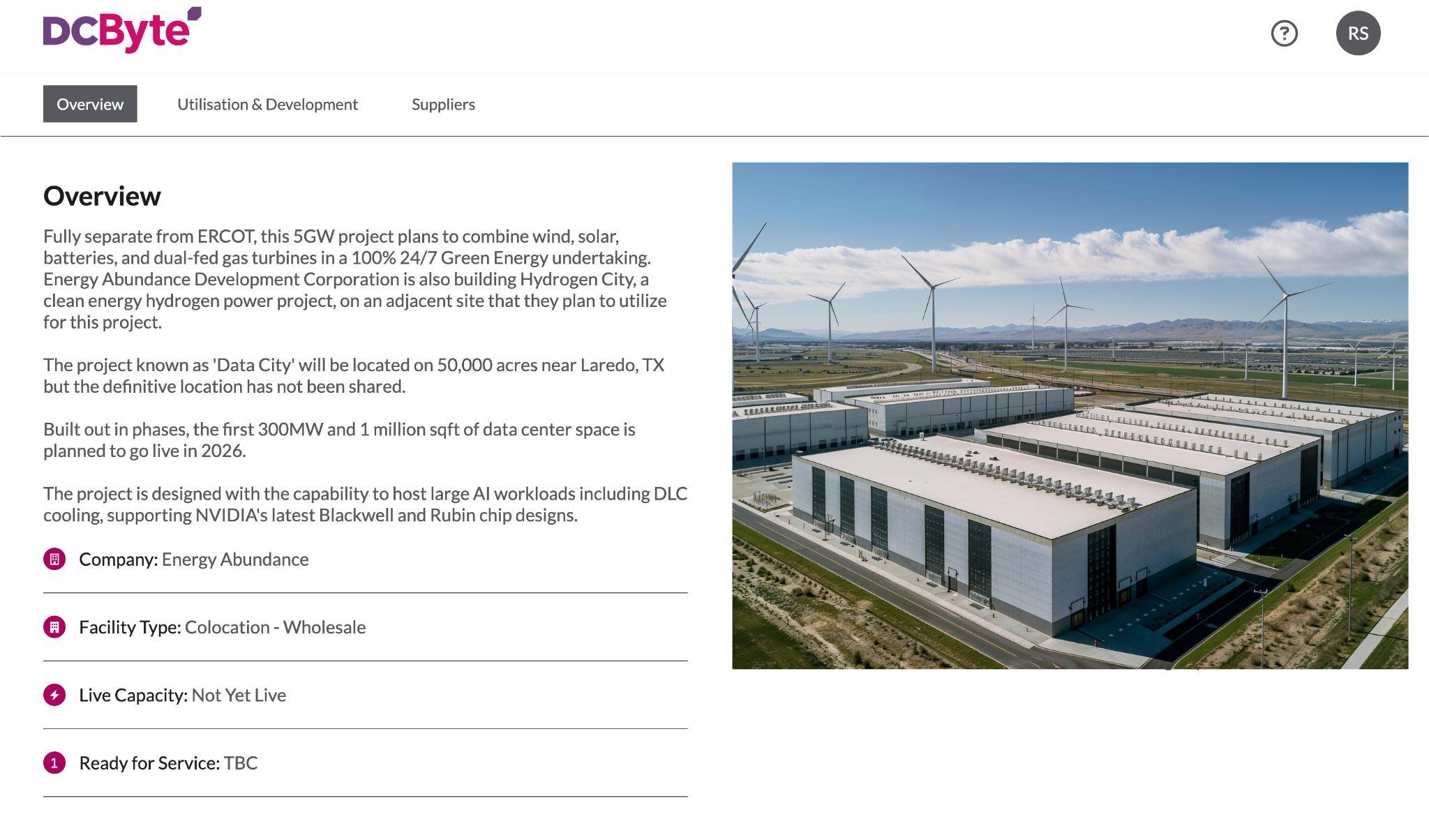
However that kind of setup is notable precisely because it is still unusual. The broader trend is toward flexible hybrid configurations rather than all-renewable systems. An instructive example is Energy Abundance’s “Data City” project in Laredo, Texas (see below). Data City is a BTM data center hub designed for AI, launching its first 300MW phase this year, and powered by solar, wind, and green hydrogen and natural gas.
What Behind-the-Meter Power Means for Data Center Strategy
For Hyperscalers: For hyperscalers, BTM is fast becoming the difference between delivery and cancelled or heavily delayed projects. Given their huge power needs for AI projects, hyperscalers are the ones most likely to be feeling the bite of grid constraints. In practical terms, this means power strategy is now inseparable from site strategy. The projects that move forward fastest are increasingly the ones that can secure power with a greater degree of independence from the grid.
For Operators: BTM offers operators a key competitive edge. Those operators using BTM to provide power in markets hamstrung by grid constraints are winning out and securing requirements competitors simply can’t deliver. Of course, BTM is not without risks for operators. From permitting and fuel supply to operational capability and capital deployment, it adds a layer of complexity beyond the typical utility-served approach. However, the market is increasingly rewarding those who take the risk and build out the capacity to deliver.
For Investors: For investors, behind-the-meter power opens up a wider set of opportunities than the data center itself. Independent power producers, fuel cell manufacturers, battery storage companies, and energy infrastructure specialists could all stand to benefit as investors look at other parts of the ecosystem. As for data centers themselves, projects that can bypass power bottlenecks may offer a clearer path to deployment and revenue for investors, particularly when compared with developments stuck in long interconnection queues.
Conclusion
BTM power has become a core strategy for data center development. Those with the means are no longer waiting for the grid to right itself.
Operators are not turning to these solutions because they are simple. They are turning to them because the alternative, in many cases, is to wait years for grid access and hope demand is still where they left it. Natural gas remains the most immediate option, while solar-plus-storage, fuel cells and colocated generation are each finding their place depending on the market, the timeline and the risk tolerance involved.
There are real trade-offs here, including cost, operational complexity and sustainability concerns. However, for much of the industry the alternative is a very long wait for power, so for many, it’s an easy choice to make.
If your planning depends on separating announced capacity from deliverable capacity, you need better visibility on data centre markets, not bigger bets. Book a demo with our team to explore our Market Analytics, where we capture global data centre capacity by market and development stage.
Related Posts

















































BOOK A DEMO
Discover the Global Data Center Landscape
Join industry leaders using DC Byte to track infrastructure across 135+ countries.