
May 7, 2026
For much of the past decade, the main constraints on data centre development in APAC have been easy to list. Power availability, land access, network connectivity, permitting, and in some markets, moratoria or sustainability rules are all factors operators must navigate in bringing a project online. However, there’s now another factor growing in importance: the role of local consent.
Community pushback isn’t totally new to APAC. In South Korea, resistance to data centre projects has been a development risk for several years, particularly around the Seoul metropolitan area. What’s new, is that similar concerns are now appearing in other APAC markets, including Japan and, to a lesser extent, Malaysia. The pattern isn’t identical in each country, but the direction of travel is worth watching.
This doesn’t mean APAC data centre growth is about to be derailed by local opposition. Demand from cloud, AI and enterprise users remains strong, and governments across the region continue to view digital infrastructure as strategically important. But for hyperscalers, operators, developers and investors, community acceptance is becoming a material concern.

South Korea
South Korea remains the clearest example of how community resistance can move from background noise to a direct constraint on delivery. A report from Savills Korea, reveals that 17 of 33 data centres with a construction permit experienced delays due to community pressures last year. The concerns cited by residents included the impact on public health, electromagnetic fields, noise, cooling systems, and property values.
A proposed site in North-West Seoul provides an illustration of the trend. This stalled hyperscale project has lain dormant since 2021, despite gaining permits that year. Progress has ground to a halt due to repeated protests from residents and civic groups on blackouts, environmental impact, and a perceived lack of benefit to the community.
This example is important because it exemplifies the major hurdle developers face in Seoul and the surrounding area. Simply explaining the benefits of a project to the wider community is no longer enough. Increasingly, developers need to make a credible case and demonstrate how they plan to mitigate concerns and deliver benefits or be met with opposition.
Japan
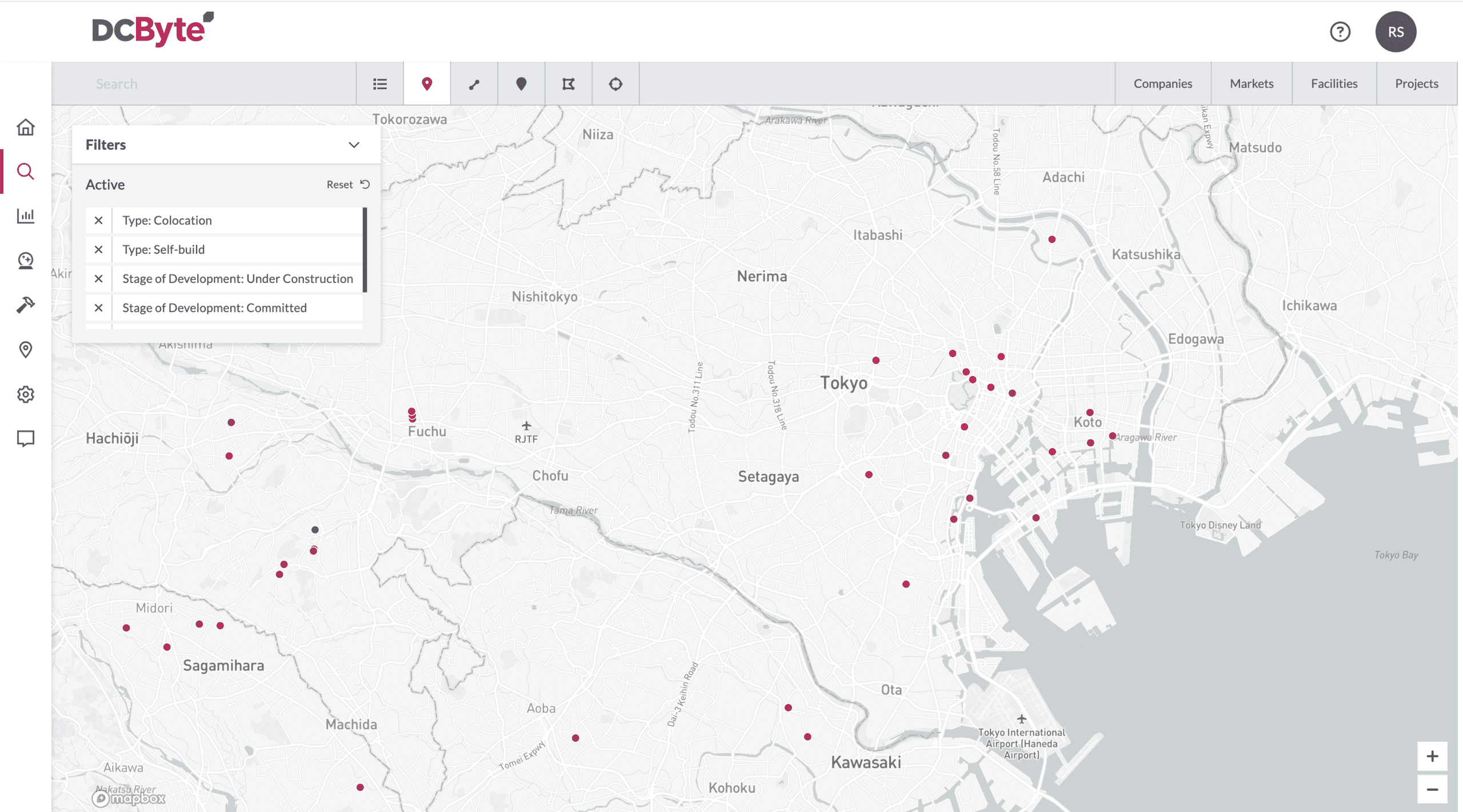
Japan is now showing signs of a similar dynamic, though with its own characteristics. In Greater Tokyo, the challenge is not only power or grid capacity. It’s also the scarcity of suitable urban and peri-urban land, and the fact that many proposed sites sit close to existing communities, provoking pushback.
Copyright@DCByte
A widely reported case is a proposed project in Western Tokyo. 220 residents were successful in blocking a large logistics and data centre development due to water use and environmental concerns.
This example is particularly cogent, because the concerns raised were broader than simple disruption. A data centre may be technically feasible on a site and developers may pledge to reduce disruption as far as possible, but local acceptance in Japan depends on a wider set of impacts. Within Tokyo this increasingly means biodiversity, water resource conservation, greenhouse gas reduction, air quality, and traffic concerns. Together, they can make the planning process slower, more politically sensitive, and expensive.
As a result, developers in Tokyo find themselves in something of a bind. The sites that work best for connectivity and operations, due to their proximity to heavily populated areas, are also often the sites most exposed to local scrutiny.
Malaysia
Malaysia is at a different stage of development to Japan or South Korea. The market has attracted significant attention as a regional data centre growth story, particularly in Johor, helped by land availability, proximity to Singapore and rising demand from cloud and AI workloads.
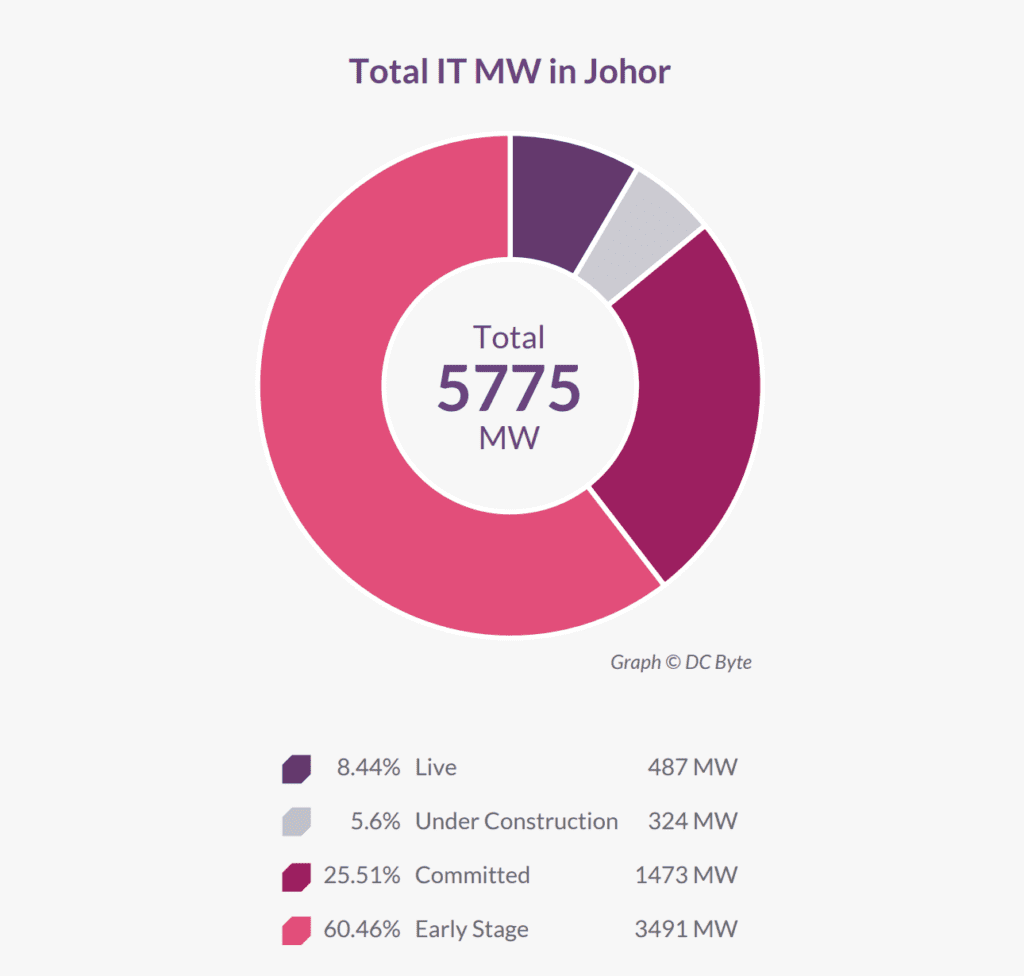
Our SIJORI Growth Triangle Market Spotlight, revealed that Johor had 5.7 GW of capacity by 2025, up from almost nothing in 2019, making it the fastest-growing data centre market in Southeast Asia. However, this rapid growth is beginning to invite greater scrutiny around water, power, land use, and benefits to the local community.
Copyright@DCByte
In February 2026, Malaysia saw what was reported as its first public protest linked to a AI-driven data centre build-out. Johor residents protested over dust and water-related concerns, including complaints that air quality had deteriorated and that residents could no longer dry laundry on balconies.
This should be interpreted carefully. Malaysia is not yet South Korea. There isn’t yet the same established pattern of widespread residential opposition to individual projects, and the government remains supportive of data centre investment. Nevertheless, the early warning signs are there.
How the industry is responding
The industry response is beginning to move beyond conventional planning and sustainability language. Across APAC, data centre operators, developers, and investors are increasingly recognising that public acceptance cannot be assumed simply because digital infrastructure is economically important.
One visible sign is the growing presence of “social licence to operate” on the agenda at industry events. These discussions reflect a shift in emphasis, from treating community engagement as a late-stage planning requirement to viewing it as part of the development process itself. In practical terms, this means explaining earlier and more clearly what data centres are, what they do, and why they are being built in a particular location.
That education piece matters. Many of the concerns raised by local communities are not simply objections to technology. They are questions about trade-offs. How much water will the facility use and how will that impact potable water supply for the residents? Will it put pressure on the local grid and drive-up electricity prices? What happens during construction? Will it affect traffic, noise, air quality or the surrounding environment? And, just as importantly, what does the local community get in return?
The industry is starting to acknowledge that the answer cannot only be framed in national or regional terms. While data centres support cloud services, AI, digital transformation and economic competitiveness, those benefits can feel remote to residents living near a site. Developers and operators therefore need to be more open about direct and indirect local contributions, whether through tax payments that support public infrastructure, grid investment, construction employment, local procurement, skills partnerships, community funds, or environmental improvements around the site. The contribution may already exist, but if it is not visible or well explained, it is unlikely to shape public perception.
Sustainability is also becoming more closely tied to social acceptance. As public scrutiny extends from land use and visual impact into water consumption, energy demand, and construction-related disruption, operators are facing more external pressure to demonstrate transparency. In this context, industry-led frameworks are becoming more relevant.
A recent example is the Sustainable Digital Infrastructure Accord (SDIA), launched by the Asia-Pacific Data Centre Association (APDCA) in March 2026. APDCA describes the SDIA as the first APAC-wide, industry-led baseline of sustainability commitments for the data centre sector. It includes voluntary targets across energy efficiency, clean energy use, water use, and circular economy practices. The framework is designed to be non-binding and to complement existing regulation, rather than replace it.
The Accord was announced around International Data Centre Day and discussed at recent industry events, including Digital Garden in Tokyo. Its inaugural signatories include:
- AirTrunk
- Digital Realty
- EdgeConneX,
- Equinix
- Global Switch
- Microsoft,
- NTT Data
- Princeton Digital Group
- ST Telemedia Global Data Centres
- Stack Infrastructure
- Vantage Data Centers
The SDIA won’t, on its own, resolve local opposition to individual projects. Voluntary regional targets aren’t a substitute for site-level engagement, and communities will still judge developments based on local impact. However, initiatives of this kind show that the industry is beginning to respond collectively.
For developers and investors, the implication is straightforward. Sustainability performance and community engagement are becoming part of market access. In APAC’s more contested locations, the ability to build trust may increasingly influence not just how quickly a project can move from concept to completion, but whether it’s approved at all.
A manageable risk, but a growing one
APAC still needs more data centre capacity. AI demand, cloud adoption, digital transformation, content delivery, and enterprise outsourcing trends all point in the same direction. South Korea, Japan and Malaysia remain important markets for different reasons, and none should be viewed through the lens of community opposition alone.
But the development environment is changing. South Korea has shown how local resistance can become a material delay factor. Japan is demonstrating how land scarcity and environmental concerns can complicate even strategically attractive projects. Malaysia is showing early signs that uncontrolled rapid growth can bring water, dust, land, and power concerns into public debate.
For the industry, the lesson is simple; community opposition is often seen as a “soft issue”, but if left unaddressed it can quickly become a hard constraint. In future, the projects that move most smoothly are likely to be those that treat community concerns as a core planning issue, not an afterthought.
If your planning depends on separating announced capacity from deliverable capacity, you need better visibility on data centre markets, not bigger bets. Book a demo with our team to explore our Market Analytics, where we capture global data centre capacity by market and development stage.
Related Posts

















































































BOOK A DEMO
Discover the Global Data Center Landscape
Join industry leaders using DC Byte to track infrastructure across 135+ countries.