
May 28, 2026
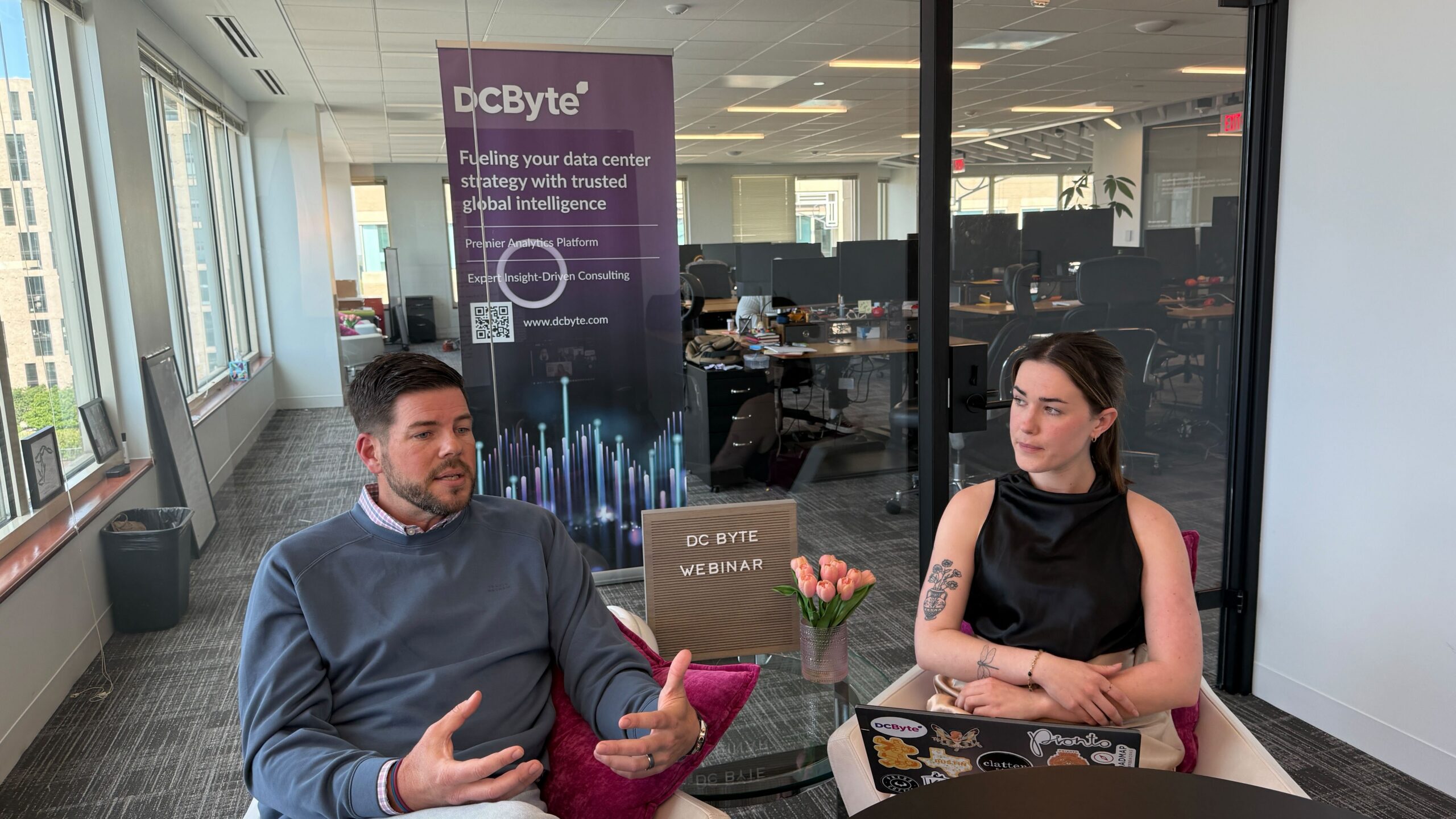
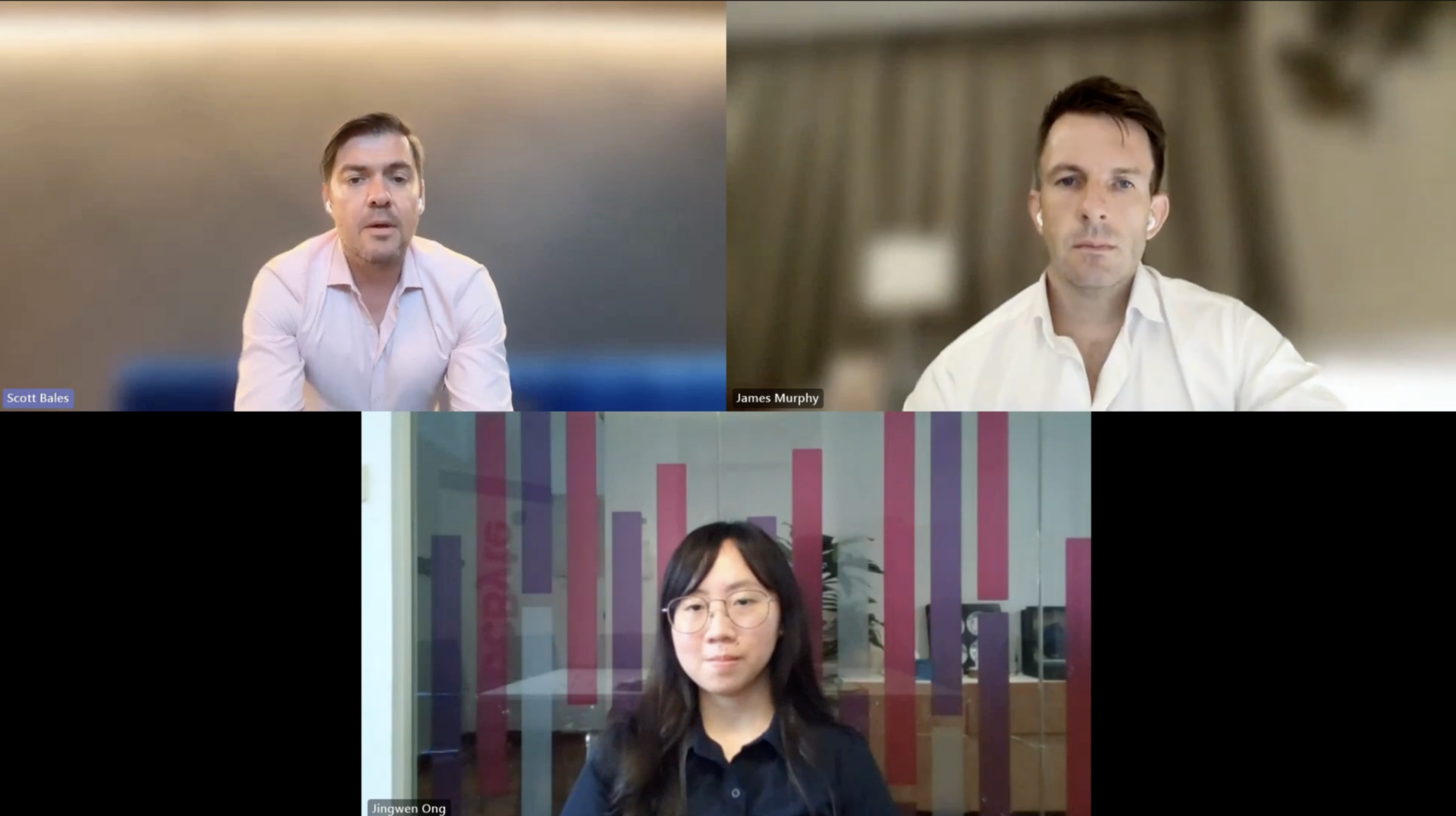
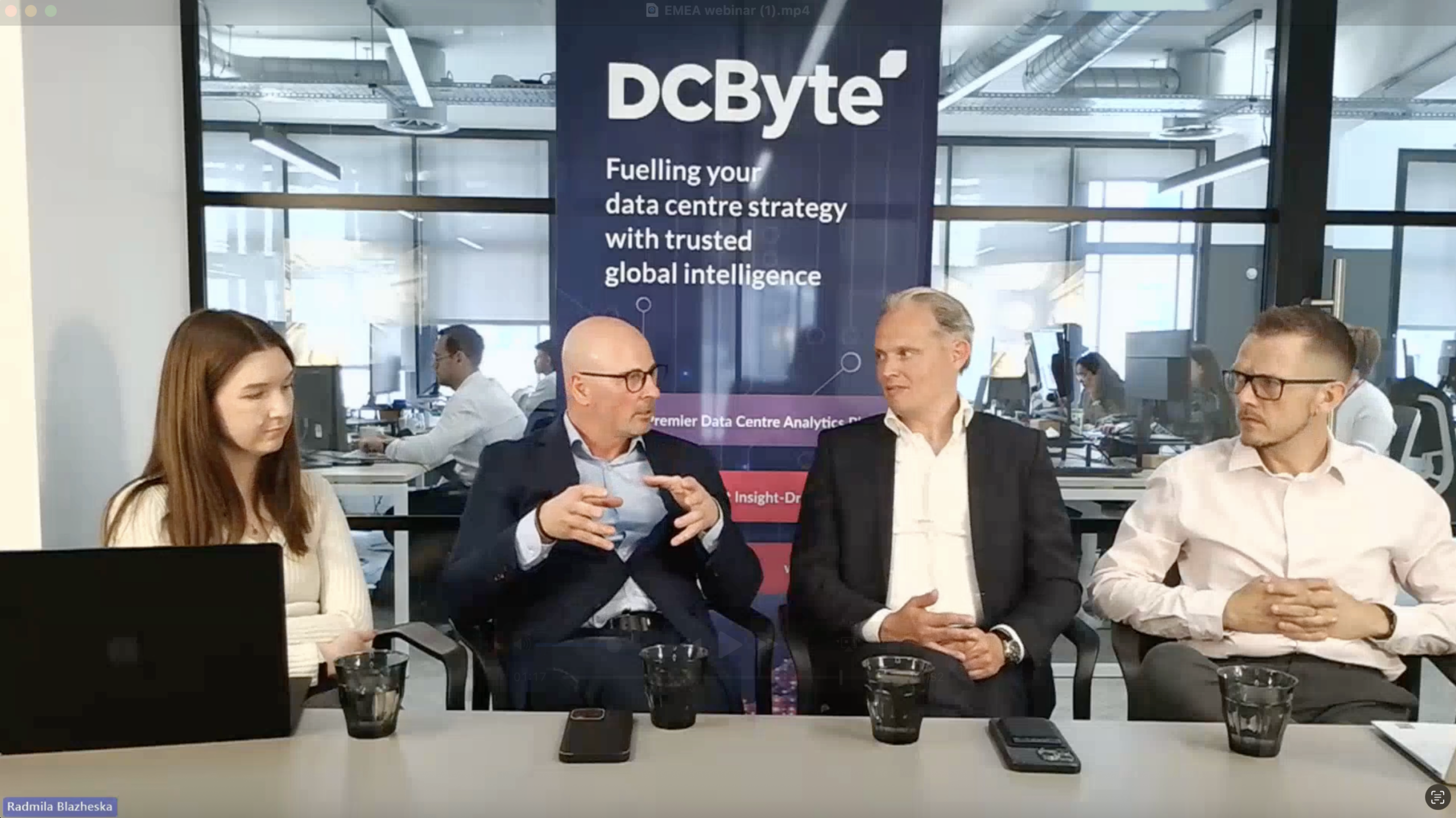
At DC Byte’s Americas Data Center Market Webinar for Q1 2026, one message came through clearly. Beyond pipeline growth figures, the US market is undergoing a transformation in where and how data centers are being built. Here are the essential talking points.
The Gap Between Planned and Deliverable Projects is Widening
The US data center market remains the most formidable in the world, with a current size of 264 GW as of Q1 2026. However, beyond the headline figures, something has begun to materially shift within the U.S. market. As Colby Cox, Managing Director, Americas at DC Byte explained, the market’s project pipeline has shifted heavily towards pre-construction.
In the years since the tail-end of the Covid-19 pandemic, the number of projects in the “pre- construction” phase has risen sharply from 59.8% of pipeline in Q1 2023 to 80.5% in Q1 2026. Meanwhile, the share of “under-construction” projects dropped from 10.8% to 6.9% across the same period.
As our panel all agreed, this signifies a widening gap between planned projects and what’s realistically deliverable, due to constraints such as power, supply chain bottlenecks and community pressure.
Growth is Diversifying Beyond Traditional Hubs
For years, US data center growth followed a well-established story, with a familiar map. Markets like North Virginia, Silicon Valley, NY-NJ, Phoenix, and Dallas-Fort Worth dominated industry growth indexes.
However, as Alexandra Desseyn, Research Manager Americas at DC Byte, noted, AI is driving a “structural infrastructure super cycle”, and this is pushing growth away from traditional hubs and into markets that can meet the technology’s requirements. The big winner has been Texas which, with 36 GW of recent growth, has now surpassed Virginia in overall market size (although not live capacity). Much of this growth has been driven by hyperscaler investment in West Texas, but alternative hubs in San Antonio, Austin, and Houston are also emerging. Beyond Texas, strong growth is showing up in Pennsylvania (11.6 of GW growth), Louisiana (7.7 GW), the Southeast (Especially Georgia and Alabama), and across parts of the Midwest.
Deliverability is driving this shift. 2026 has made clear that the key constraint is not demand, instead, it’s how likely a market is to deliver. As Colby Cox, puts it, “The winning markets are not simply the biggest, they’re those that can provide large, contiguous blocks of AI-ready power with fewer entitlement delays and lower community risk.”
AI Is Changing the Shape of Data Centers
AI demand is fundamentally different from traditional cloud growth. It’s not simply additive, it’s transformational. Our panel all shared examples of facilities being redesigned for radically higher densities and industry discussion already moving from 1 MW racks toward even higher thresholds.
AI is also shifting how data centers are built. To cope with compressed timelines, the industry is leaning into modular construction. Factory-built components combined with on-site assembly are helping shave months off delivery schedules. More broadly, adaptability has become the guiding principle of modern data center design. Flexible phasing, liquid-cooling-ready space, and campus layouts that allow for evolving equipment requirements are all becoming essential features.
Power procurement strategies are changing too, with greater reliance on behind-the-meter substations, private generation, and bring your own power models. At the same time, AI workloads are evolving. The shift from large-scale training toward more distributed inference workloads may ultimately pull capacity back towards population centers, reshaping site selection all over again.
Power Remains a Key Constraint
Across our panel, one message was remarkably consistent. Power is still the biggest constraint, and it’s likely to remain so for years to come. Mara Ervin, Data Center Development, Stonebridge and Chair at iM Women Eastern U.S expanded on this point, “Power constraints haven’t changed. In fact, power is dictating where projects are being planned and built. For example, projects are being built where there’s no market for a data centre because of access to power.”
Teri Klug LaSpina, National Director, Business Development Big-D Companies agreed, “Many sites look viable until late-stage realities surface, such as interconnection queues, transmission limits, or even tapped-out gas lines.” Power constraints are compounded by supply chain delays, especially for the long-lead equipment required to energize large campuses on compressed timelines.
As a result, developers are increasingly being forced to act like power companies, something few want to do long term. Partnerships with utilities, private generation, and creative interim solutions are becoming essential bridges, rather than the more niche power options they were just a few years ago.
Community Opposition Has Become a Real Project Risk
Perhaps the most significant development discussed by our panel wasn’t technical, it was social. Public opposition to data center projects has intensified dramatically in the years following the COVID-19 pandemic, fueled by concerns around water use, noise, land consumption, and infrastructure strain.
In some cases, community resistance has delayed or even halted projects. In others, it has generated political risk for local officials, turning data centers into an election issue. To illustrate, Mara Ervin used the example of Festus, Missouri, where all four incumbent council members running for re-election were ousted due to their approval of a $6 billion data center in the town.
Teri Klug LaSpina also highlighted how misconceptions often deviate a long way from reality, particularly around water usage. “For instance, a 300MW data center using a closed loop environment, now the most common technology for new builds, only uses an Olympic sized swimming pool worth of water, which is circulated continually, rather than refilled every day.”
However, our panel felt that community pushback is far from inevitable. There was broad agreement that the projects moving forward share some common traits:
- Early, transparent engagement with local communities
- Validation of concerns before education
- Clear communication around water, power, and economic benefits
- Tangible investment in local infrastructure, schools, and workforce development
Mara cited how the data center industry has traditionally struggled with validating community concerns. “I think sometimes when we’re dealing with the community and that public push back, our immediate response is to minimize those concerns like water. Let’s listen to them first, validate their concerns, don’t minimize them out of the gate and then educate communities.”
Mara also explained how the most successful projects know when to slow down and seek community buy-in. “Even when local communities are building out innovation districts that welcome data centers, I really encourage community leaders to slow down and start educating early, because even if the legislative body is ready for a data center, the community isn’t.”
Capital Is Becoming More Selective
Despite the challenges faced by the industry, our panel agreed that investment capital is not in short supply. On the contrary, investors remain eager but are becoming far more selective in the projects they take on. Investors are progressively looking for what Colby Cox termed “de-risked projects”. In practice, this includes:
- Clearly defined power pathways
- Aligned tenants and underwriting assumptions
- Strong local and political support for projects
- Designs that can adapt as technology evolves
Technology obsolescence and delivery uncertainty have become central underwriting questions, and this is especially true for AI and neocloud projects, as Mara Ervin explained, “The new native Neocloud tenants are very hard to underwrite, and it involves a lot of risk for investors. So, investors are increasingly looking for de-risked projects, they’re looking for assigned tenant, they’re looking for secure power, they’re looking for all these things.”
The Bottom Line
According to our panel, the key takeaway from Q1 of 2026 was that demand is no longer the key measure of what makes a data center market successful. Instead, we’ve reached an inflection point where the markets and developers that meet the moment best will be those that can secure and deliver power, build trust with communities, and design facilities that can evolve with technology.
Want to hear more from our panel of data center experts? Watch our Americas Webinar in full here.
If your planning depends on separating announced capacity from deliverable capacity, you need better visibility on data center markets, not bigger bets. Book a demo with our team to explore our Market Analytics, where we capture global data centre capacity by market and development stage.
Related Posts
































BOOK A DEMO
Discover the Global Data Center Landscape
Join industry leaders using DC Byte to track infrastructure across 135+ countries.