
August 5, 2026
Southeast Asia’s data centre map is being redrawn. Although Singapore continues to play an important regional role, supported by its longstanding position as a global financial centre and connectivity hub, another group of markets is developing into alternative regional hubs in their own right.
Using data from DC Byte’s Global Index Report 2026, this article looks at three markets that best illustrate the shift: Kuala Lumpur, Bangkok, and Jakarta. Each benefits from a different combination of hyperscale demand, cloud adoption, government support, available land and power, and growing domestic digital activity. Together they demonstrate the distributed nature of Southeast Asia’s next phase of data centre growth.
Kuala Lumpur
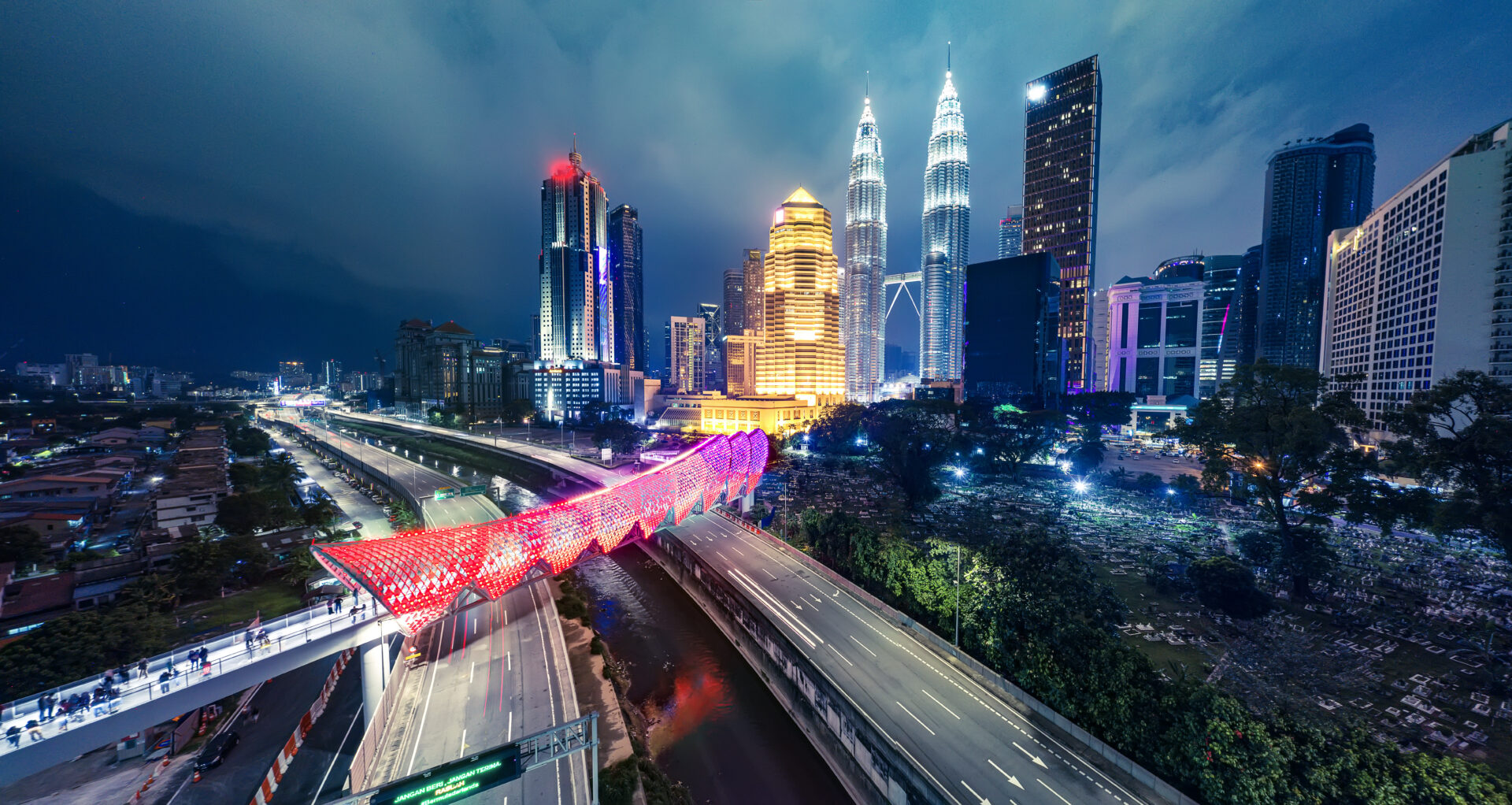
Kuala Lumpur’s data centre market has experienced rapid growth over the past five years. A confluence of hyperscale, cloud, and enterprise demand has seen the market expand substantially. Although Johor has become Malaysia’s main hyperscale hub, the national capital continues to attract investment due to its base of enterprise customers, strong network infrastructure, and an established digital ecosystem.
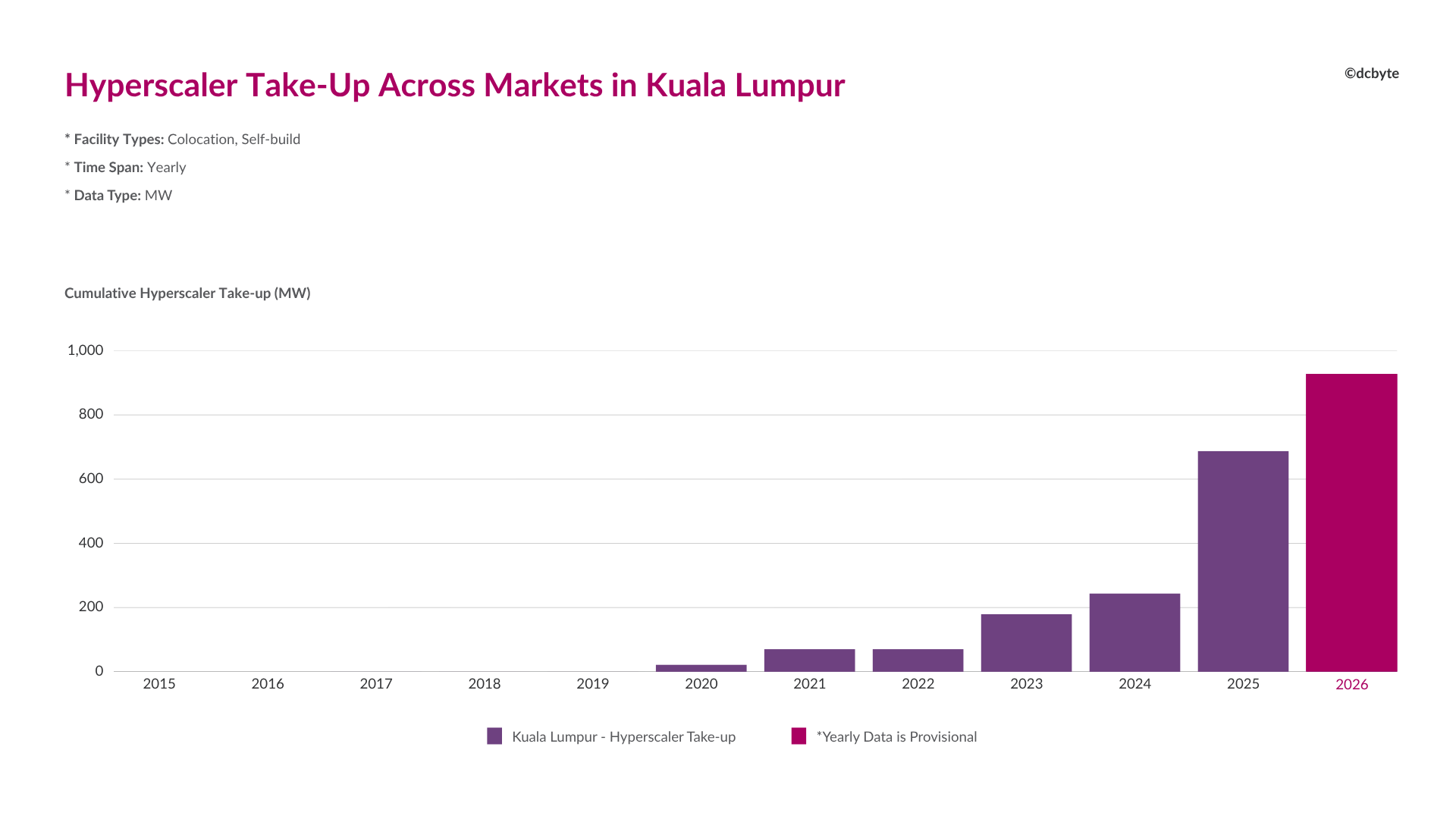 Malaysia’s competitive development economics have been key to this growth. Kuala Lumpur benefits from relatively low land and operating costs, particularly for a major global city, along with readily available power resources and a favourable business environment. However, economic conditions are not the only factor in play; government support for the industry has been equally important. Accelerated approval processes, investment incentives, and initiatives such as the Green Lane Pathway have made Malaysia an attractive market for operators and hyperscalers alike.
Growth looks set to continue, supported by land acquisitions by hyperscalers and ongoing expansion by major campus developers. Kuala Lumpur has approximately 7.7 GW in its pipeline and is set to see a significant increase in operational capacity over the next few years, as at least some of that potential capacity comes online. The Malaysian government also remains supportive, but policy is becoming more strategic rather than purely expansionary, with greater emphasis on sustainability, resource management, and efficient infrastructure use.
Moving forward, Greater Kuala Lumpur is likely to attract a broader workload mix spanning cloud, AI, and enterprise deployments, strengthening Malaysia’s role as a regional data centre hub alongside Johor while continuing to serve domestic demand.
Bangkok
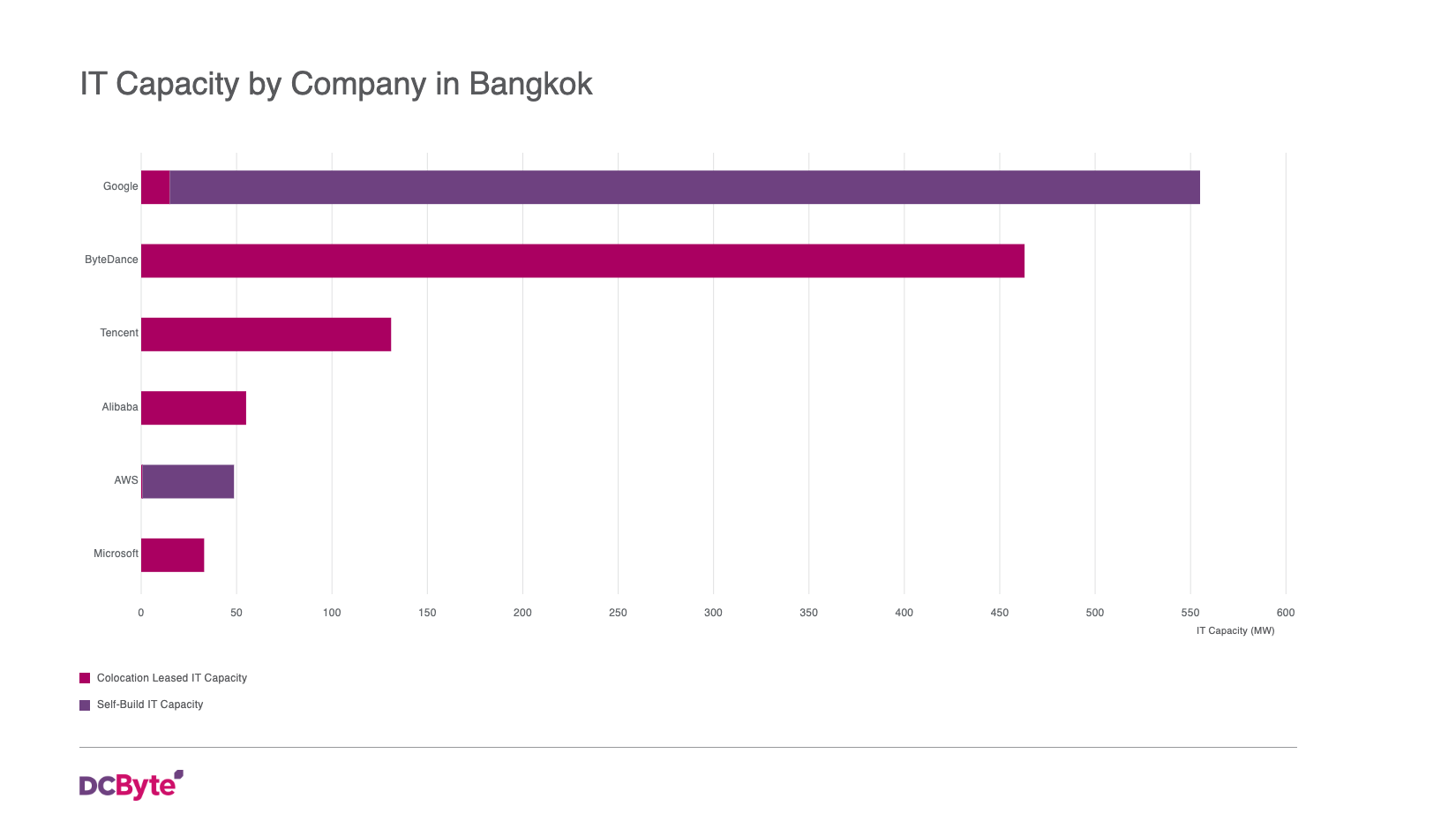
Bangkok is shifting from a relatively small, enterprise-led market into a major hyperscale destination. AWS opened its first Thailand cloud region with three Availability Zones in January 2025. Meanwhile, Google Cloud has launched in the region, and Microsoft plans to invest more than US$1 billion in Thai cloud and AI infrastructure between 2026 and 2028.
Copyright@DCByte
This hyperscaler activity is accompanied by a broader development pipeline. The Thai capital has approximately 2 GW of capacity in the “under construction” and “committed” stages of development. This excludes projects in the early stages of development, which could add another 4 GW of capacity. According to industry estimates, this could represent more than US$23 billion of proposed investment across Bangkok and surrounding provinces such as Chonburi, Samut Prakan, Pathum Thani, and Rayong.
Demand in Bangkok rests on a few intersecting factors. Thailand is seeing growing cloud adoption and AI deployment, alongside regulatory demand for locally hosted data. This is supported by government incentives and land availability outside the urban core. As a result, development is spreading across the wider Bangkok region, with urban facilities serving connectivity-led requirements and those in the city’s industrial periphery geared towards larger campus facilities.
However, Bangkok is not without its potential constraints. Power delivery has become a small blocker for some operators, as existing transmission infrastructure struggles with demand. Indeed, Thailand recently tightened regulations on data centres, to manage power and water demands. Key changes include a new energy management screening committee, proposed foreign ownership restrictions via license reclassifications, stricter utility and zoning audits, and dedicated power tariff.
This is not to say Bangkok’s rise is in doubt, but the speed of its growth will depend on how quickly approvals can be converted into live facilities.
Jakarta
Jakarta’s growth story is similar to Bangkok’s. The city has become Indonesia’s main cloud and hyperscale data centre hub, supported by AWS’s Asia Pacific (Jakarta) Region with three Availability Zones, Google Cloud’s Jakarta region, and Microsoft’s Indonesia Central cloud region, which launched in 2025.
Demand within the market continues to scale quickly, driven by Indonesia’s large digital economy, enterprise cloud adoption, data residency needs, and AI growth. Jakarta has seen major operators, including DCI Indonesia, Digital Edge, NeutraDC, STT GDC, as well as hyperscalers ByteDance, Microsoft, and Alibaba Cloud, all adding aggressively to its pipeline in recent years.
This growth is projected to continue. The market’s future development is likely to follow a two-tier model comprising connectivity-rich facilities in or near the central business district and larger hyperscale campuses across Greater Jakarta’s industrial estates.
What the Markets Have in Common
One overarching theme common to all three future-growth markets is where demand is coming from. All three markets are benefiting from cloud adoption, AI workloads, hyperscale expansion, enterprise digitisation, and growing data residency requirements. Similarly, each of the three is an emerging regional hub, illustrating the pattern across APAC of growth, particularly driven by hyperscalers, seeking out alternative markets.
Furthermore, all three markets share some key factors that make them attractive destinations. Costs are competitive across all three markets, resource availability is high, and construction delivery times are comparatively short to more constrained markets in the region.
In conclusion, the growth of these markets illustrates the trend towards alternative regional hubs accross the global data centre ecosystem. This is a pattern repeated globally. As demand rises in every region, deliverability has become one of the key factors in a market’s attractiveness. As such, those markets that offer ready access to power, faster grid connections, and a supportive policy environment are likely to see the greatest expansion in the years ahead.
Get More Insight from the Global Index Report 2026
The rankings above form only part of the picture. For the full list of APAC’s Future Growth Markets, download DC Byte’s Global Index Report 2026.
The report provides a deeper view of the world’s leading data centre markets, including how they compare across live capacity, pipeline, development stage, market maturity, demand drivers, and future growth potential. The full report covers:
- The top ten data centre markets in EMEA, APAC, and the Americas
- Market commentary, including data, on each of our leading markets
- EMEA, APAC, and the Americas’ top ten future growth data centre markets
- Analysis from DC Byte’s research team on what these rankings mean for the global data centre ecosystem
Whether you are planning investment, market entry, site selection, operator strategy, or supplier targeting, the report gives you the insight needed to understand where growth is happening, what is driving it, and which markets are best placed to deliver.
Download DC Byte’s Global Index Report 2026 to explore the full rankings and market analysis.
If your planning depends on separating announced capacity from deliverable capacity, you need better visibility on data center markets, not bigger bets. Book a demo with our team to explore our Market Analytics, where we capture global data centre capacity by market and development stage.
Related Posts




































































BOOK A DEMO
Discover the Global Data Centre Landscape
Join industry leaders using DC Byte to track infrastructure across 135+ countries.