
September 17, 2026
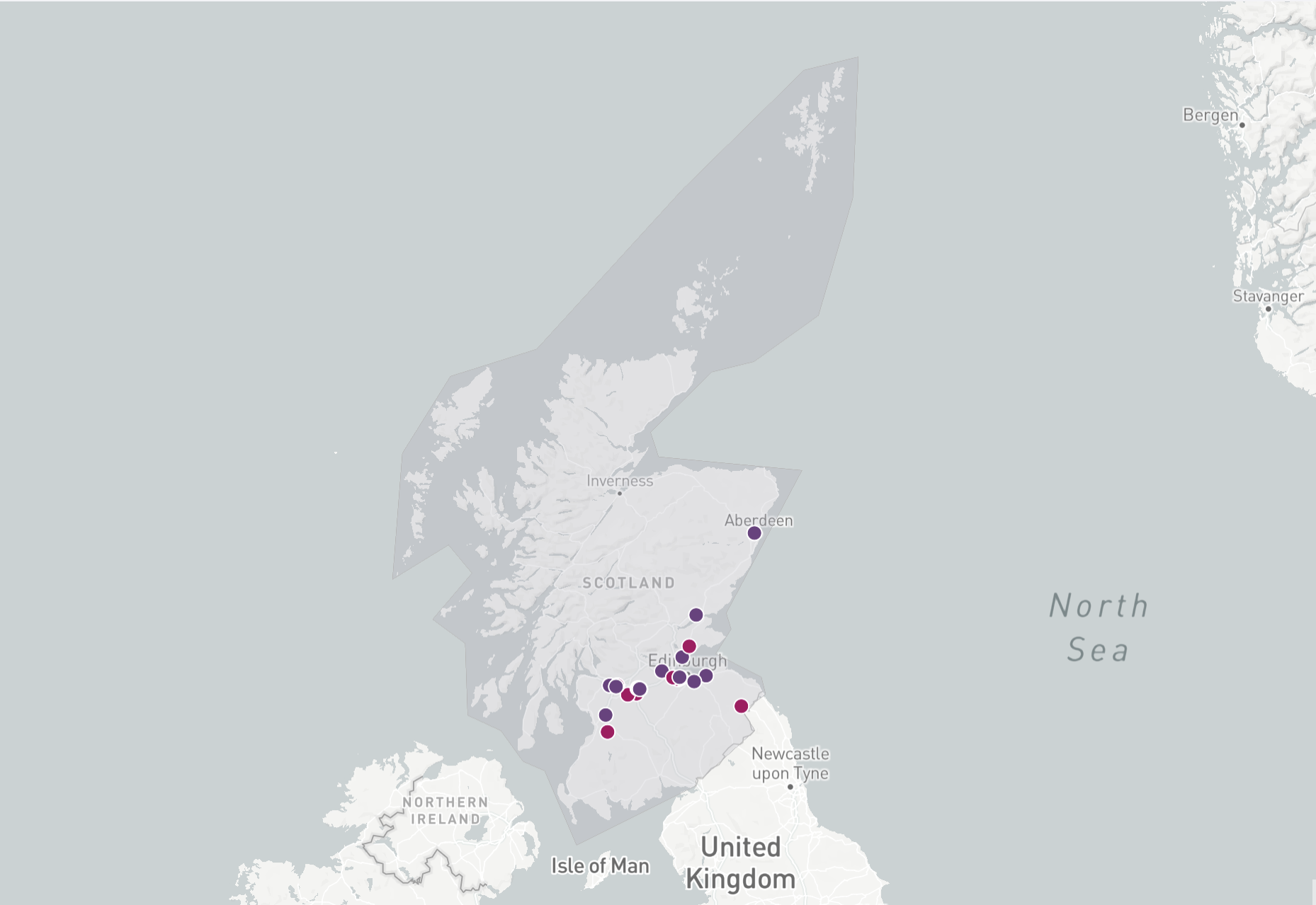
Scotland’s data centre market has traditionally been a small, relatively local concern. As recently as 2024, the market was little more than a handful of retail colocation facilities, with a total size of approximately 10 MW. These facilities were clustered almost exclusively in the country’s central belt between Glasgow and Edinburgh, home to much of Scotland’s population and cloud demand.
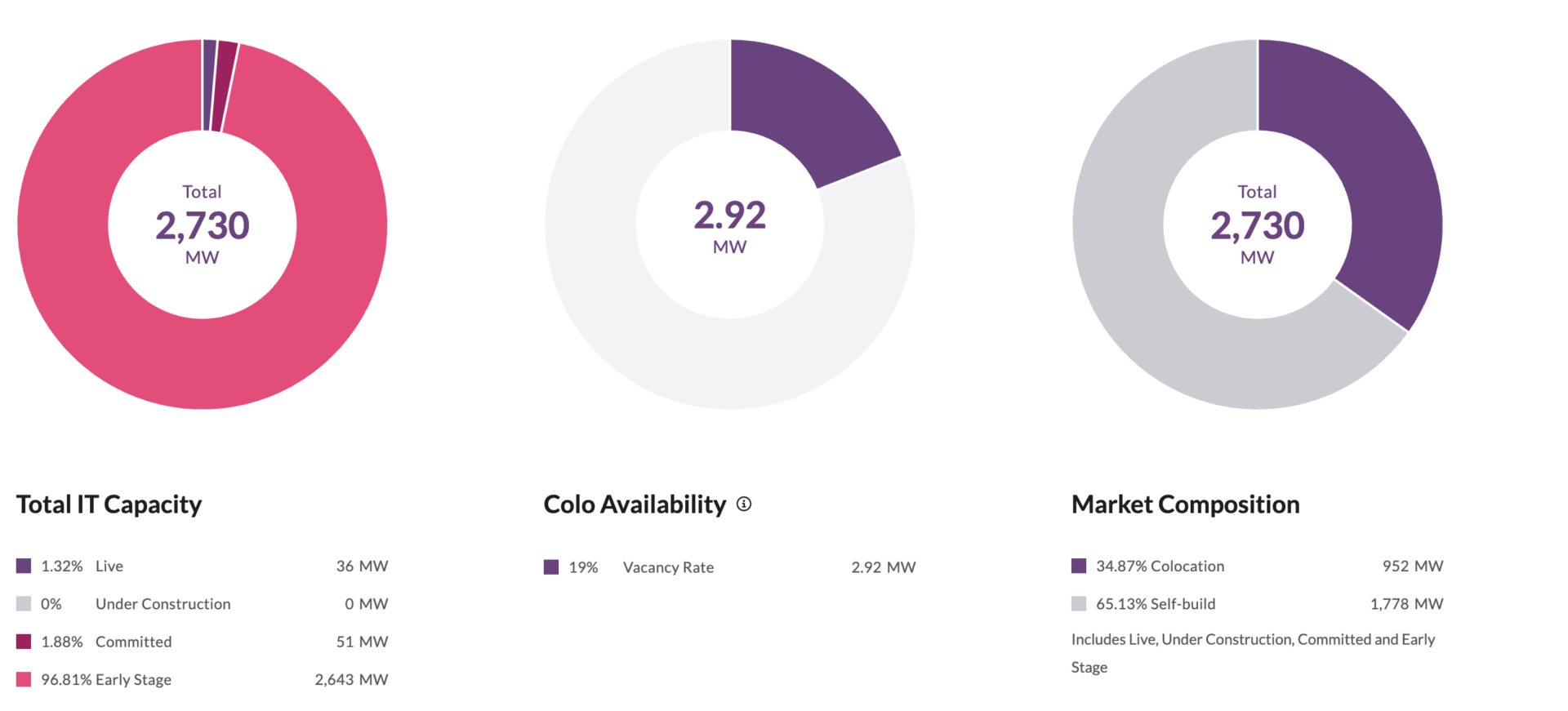
However, since then something has changed. At the time of writing, the country has a pipeline of around 2.7 GW, signifying a sharp uplift in demand. In this article, DC Byte’s analysts investigate what’s behind the market’s emergence and what the future could hold.
Dispersing UK Growth
For decades, any discussion of the UK data centre market focused on a relatively small geographic area of the country in London and the wider Southeast. Greater London and its periphery remain the UK’s key data centre hub, dwarfing other regional or city markets for size and demand.
Nonetheless, in the past few years the UK market has undergone a small but growing change. London and the Southeast face constraints around available land, power, and connection timelines, in common with many of the world’s leading markets. As a result, hyperscalers, operators, and developers have begun to look further afield in relatively untapped regional markets. Scotland, which has long had one of the largest technology clusters outside of London, looks set to be one of the main beneficiaries of this.
What’s Behind Growing Interest in Scotland?
Renewable Generation
Scotland’s greatest potential advantage is undoubtedly renewable power generation. The country generated 70% of its electricity from renewable sources in 2023. And, according to the Scottish Government, an estimated 76.5 GW of renewable generation and storage projects were in the planning pipeline by the end of 2025.
This matters because the biggest constraint on AI and hyperscale development is power availability. Therefore, Scotland, with its abundance of renewable energy, holds an appeal for operators seeking credible access to lower-carbon electricity.
This also has the potential to be mutually beneficial. Due to transmission constraints, wind curtailment is common among Scottish energy producers. This is the deliberate reduction of output from wind turbines below what they could otherwise produce, due to the grid’s inability to transmit all the potential power south to major population centres. With some workloads, particularly training AI, not requiring access to a large consumer or enterprise base and able to handle higher latencies, there is an opportunity for data centres to provide demand close to sites of renewable generation.
Of course, renewable generation is not equivalent to readily available data centre power. The grid must still be capable of delivering that electricity to the required site at the required scale. Scotland’s infrastructure needs further development to make this a reality, but the potential is there.
Brownfield Land Availability
As a former industrial heartland, Scotland’s central belt possesses a lot of development-ready brownfield land. Former industrial sites can offer large parcels of land and close proximity to existing energy infrastructure, even if grid connections aren’t necessarily data-centre-workload ready.
As we’ve seen in other EMEA markets, such as Finland and the Nordics, these sites often prove attractive to hyperscalers and developers searching for cost-efficient locations for large workloads and campus-style developments.
For example, at Ravenscraig, the former steelworks near Motherwell, a major operator has proposed a 550 MW development alongside a 150 MW battery energy storage system. In addition, other operators have released plans for similarly sized projects on former industrial land in Kilmarnock and Cowdenbeath.
However, like Scotland’s potential renewable generation benefits, this does come with a caveat. Some 97% of the country’s total IT capacity is in the early-stage or committed stages of development, much of this generated by the proposed redevelopment of brownfield land. It remains to be seen how much of that figure is speculative and what will translate into live capacity.
The Role of AI
In a trend seen across the sector, demand for AI infrastructure is weakening the traditional relationship between facility location and proximity to major population centres. As mentioned, training workloads can tolerate far greater latency than cloud or retail-focused applications. This makes power-rich locations like Scotland more commercially viable. Indeed, Lanarkshire, within the country’s central belt, was designated as the country’s first AI Growth Zone in January 2026.
Scotland is well suited to serving power-intensive AI training, high-performance computing, research, and distributed computing workloads, due to its relatively cheap land parcels and access to power. This could lead to growing demand in the coming years. The UK’s National Energy System Operator believes that as much as one-fifth of the nation’s future data centre demand could be based in Scotland in the future.
Scotland Offers More Than Power and Land
Scotland’s appeal extends beyond its renewable energy and land resources. Its cooler climate can reduce mechanical cooling requirements, depending on facility design. Scotland’s long-established energy and engineering industries also offer a pool of transferable skills, particularly in electrical infrastructure, construction, and complex project delivery. These capabilities could help support data centre growth, although specialist training will still be needed as the market expands.
Universities and research institutions in Edinburgh, Glasgow, Dundee, and Aberdeen add to that proposition, alongside technology sectors spanning AI, financial services, life sciences, gaming, and space. Together, they offer potential customers, research partners, and sources of talent for an expanding digital infrastructure sector.
Obstacles to Growth
Grid Access
Scotland’s renewable energy resources provide a strong foundation for data centre growth, but securing usable power remains a significant development challenge. Perhaps tellingly, the Scottish Government has previously identified grid constraints as a barrier for prospective hyperscale investors.
Some of the problem could be offset by locating facilities closer to renewable generation, where direct supply is feasible. However, these approaches need to satisfy operators and customers’ requirements for availability and resilience, and they cannot be assumed to remove the need for network investment. Thus, Scotland’s ability to convert developer interest into operational capacity will depend on coordinating data centre construction with electricity infrastructure upgrades.
Connectivity
Similar to questions around grid access, the Scottish market also has potential connectivity constraints. While the country’s central belt provides the reliable, high-capacity fibre networks that data centre operators need, more remote locations – where the renewable power opportunities are – are likely to require heavy additional infrastructure investment.
Alongside this, Scotland currently has relatively poor international connectivity. Its geography offers opportunities for subsea links to continental Europe, North America, and the Nordic region, but at the time of writing these haven’t yet been realised. Although it should be noted, developing terrestrial and international fibre connections is a central ambition of the Scottish Government’s green data centre strategy released in 2021.
Growing Scrutiny
Planning and community support will play an increasingly important role in Scotland’s data centre growth. Some of the large campus projects slated for development in the country have drawn public scrutiny in recent months. Community concerns about total electricity demand, visual impact, backup generation, water use, environmental effects, and the credibility of employment claims have all surfaced in the wake of planned infrastructure announcements.
This, in turn, has led to greater government scrutiny. In August 2026, Scotland introduced a requirement for planning authorities to notify ministers of newly validated data centre applications exceeding 50 MW within seven days. Following this, in September 2026 Holyrood voted to pause planning applications for all new AI data centres for up to a year. Echoing July’s pause in New York State, the measure is designed to give the Scottish government time to develop a national strategy.
However, this doesn’t have to be an insurmountable problem for operators and developers. As we’ve seen in other markets, operators who are able to demonstrate measurable local value, whether through local supply-chain spending, energy use transparency, community investment, or heat reuse, can achieve community buy-in. Social licence is a factor that’s growing in importance across the global data centre ecosystem, so Scotland is certainly not alone in facing this potential constraint.
A Future Strategic Market?
Scotland enjoys an unusually strong combination of renewable power generation potential and available brownfield land. And it’s these factors that are behind growing demand, particularly from operators and developers prioritising large scale workloads. As a result, there’s a real opportunity for Scotland to develop into a strategically important market that complements the UK’s core hub in London and the Southeast.
Nevertheless, the market’s current trajectory is based more on headlines about announced megawatts than it is on under construction or live capacity. To truly emerge as a key strategic market, it’s large pipeline must begin transforming into actual capacity. To achieve that, the market will have to address potential constraints around power, connectivity, and community support.
If your planning depends on separating announced capacity from deliverable capacity, you need better visibility on data centre markets, not bigger bets. Book a demo with our team to explore our Market Analytics, where we capture global data centre capacity by market and development stage.
Related Posts







































































































BOOK A DEMO
Discover the Global Data Centre Landscape
Join industry leaders using DC Byte to track infrastructure across 135+ countries.