
August 28, 2026
Latin America (LATAM) is one of the world’s highest-potential data center markets. Once a relatively small retail colocation market, the region is now experiencing growth on a par with other emerging markets, such as the SIJORI triangle in Southeast Asia and the Iberian Peninsula in Europe.
At the core of this growth sits Brazil, the region’s undisputed hub for data center infrastructure. Like the region as a whole, the Brazilian market has seen significant growth in the first half of the decade, rising from around 450 MW in 2021 to 10 GW in 2026. As part of our September Spotlight on the LATAM data center market, DC Byte’s analysts look at what’s behind Brazil’s growth and its central role in the region.
The Importance of São Paulo
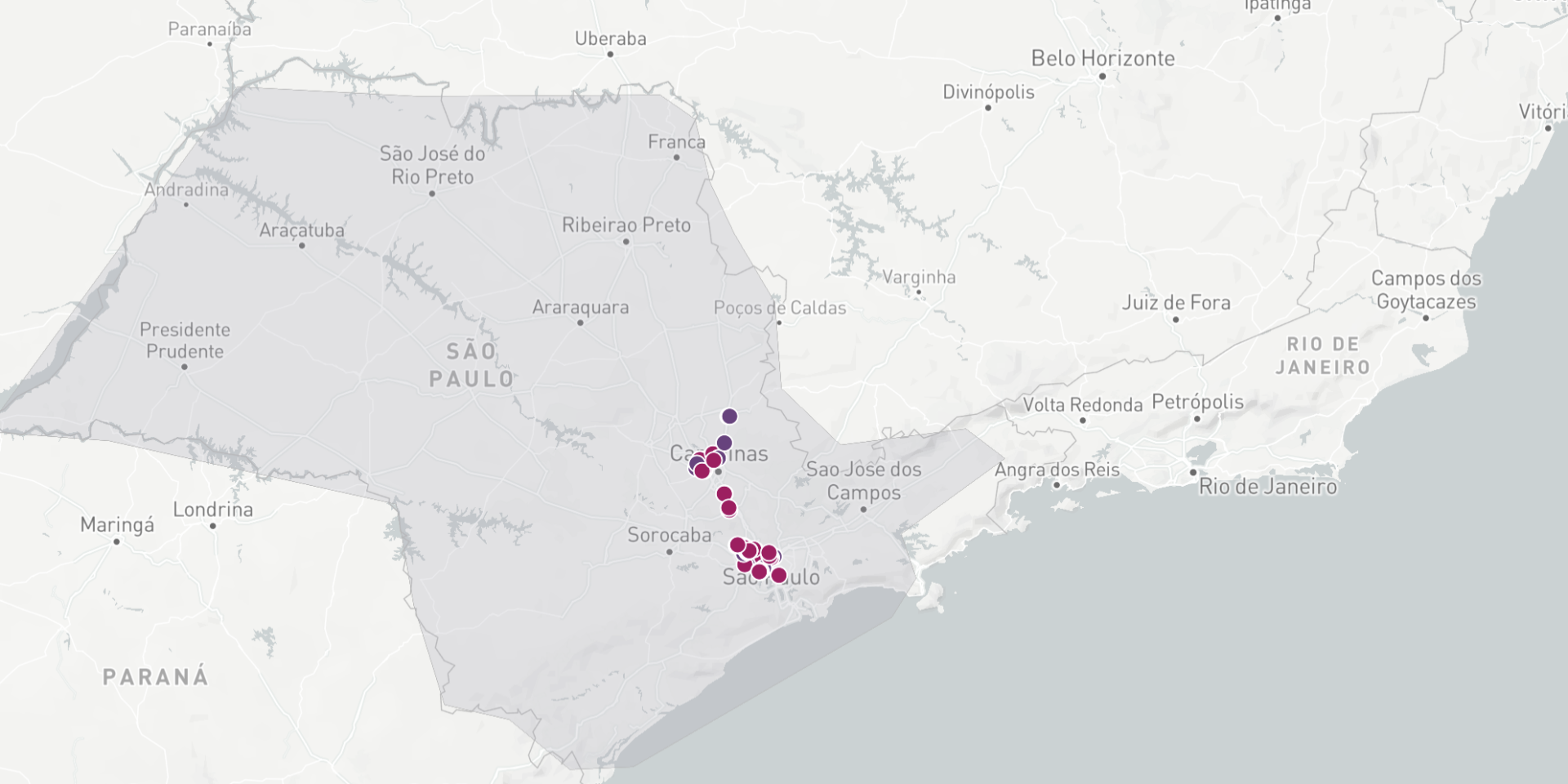
In common with other LATAM markets, Brazil’s data center ecosystem is anchored by a single metropolitan market. São Paulo, in the country’s densely populated south, has LATAM’s largest concentration of major operators, dominated by local firms Ascenty, Elea, and Scala.
São Paulo benefits from deep domestic demand for cloud and enterprise workloads due to the 21–22 million inhabitants of its greater metropolitan area. However, the market has also begun to see demand for AI workloads. The city also possesses strong fiber and subsea connectivity, reinforcing its position as the country’s primary interconnection and cloud hub. It’s for these reasons that São Paulo currently accounts for over three-quarters (76%) of all live capacity in Brazil.
Brazil’s Strengths
Brazil’s strength is underpinned by strong infrastructure and power availability. The market has seen continual grid development in recent years. Alongside this, Brazil has a plentiful renewable energy supply, coupled with federal tax exemption incentives for large-scale projects that use 100% sustainable power under the government’s REDATA initiative, making it an attractive proposition for international operators with environmental commitments.
In addition to Brazil’s energy mix, the country also offers some of the best connectivity in LATAM. Subsea cables to the US, Mexico, and the rest of LATAM make Brazil the key connectivity hub in the region. In particular, its connections with the rest of LATAM give it a broad role serving smaller regional players like Chile, Colombia, and Argentina.
Local Operator Dominance
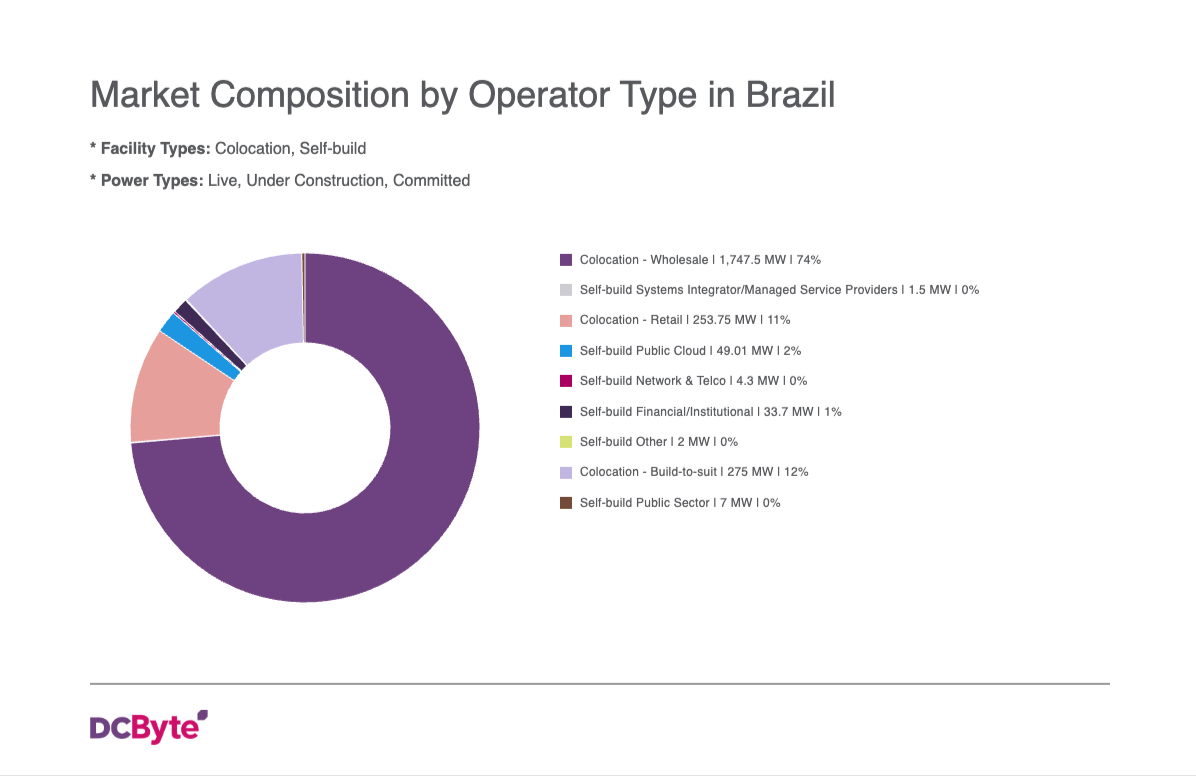
As mentioned earlier, the Brazilian market has typically been (and remains) dominated by a handful of key local operators: Ascenty, Elea, and Scala. Together, these three South American operators currently account for 85% of Brazil’s total IT capacity.
However, there are early signs that this dynamic is beginning to shift. International players Microsoft and Equinix have made major investments in the Brazilian market in recent years, pointing to growing interest in the Brazilian market from international operators and hyperscalers.
Potential Constraints
Despite its growth and continued importance to the region’s data center ecosystem, Brazil isn’t free from constraints. Like many leading markets, the principal constraint is power delivery rather than demand. Grid connection timelines, the dwindling stock of available powered land in Greater São Paulo, and slow transmission upgrades can all put the brakes on new development.
In addition, the changing tax regime is growing in importance. The REDATA tax initiative was designed to remove federal taxes on qualifying data center projects, subject to renewable energy, efficiency, domestic capacity, and R&D requirements. However, the original provisional measure expired without a full senate vote in February 2026, throwing its future into uncertainty. At the time of writing, replacement legislation remains under consideration by the Brazilian senate but is still some way from passing into law. While this could well prove temporary, it may cool some of the demand coming from international operators and hyperscalers.
The Rise of Submarkets
Although São Paulo is likely to remain Brazil’s and Latin America’s data center hub, growing constraints on the availability of powered land are shifting some demand to smaller regional locations, particularly for large hyperscale projects.
Of these, Rio de Janeiro, Porto Alegre, and Fortaleza stand out. Rio de Janeiro’s growth is primarily being driven by the huge Rio AI City development, slated to add around 3 GW of capacity when completed, though the city is also home to several smaller colocation developments.
Porto Alegre’s story is similar to Rio de Janeiro’s. The market within the city itself is largely confined to small retail colocation sites. However, the wider Rio Grande do Sul area that surrounds it is home to LATAM’s largest hyperscale campus, set to reach around 4.75 GW on completion.
The picture in Fortaleza is different. The coastal city is home to Praia do Futuro beach, site of the leading subsea cable hub in LATAM. Seventeen of the country’s fiber-optic cable systems land in the resort, which handles the vast majority of Brazil’s overseas internet traffic. As a result, the city has a small but growing market for connectivity- and cloud-focused workloads.
The Future Outlook
Despite some potential constraints, Brazil’s market outlook remains strongly expansionary. The country is moving from being a colocation market primarily focused on São Paulo into a much larger hyperscale and AI infrastructure market. São Paulo will remain the core hub, but the next phase of growth is likely to be supplemented by demand in Rio de Janeiro, Porto Alegre, and Fortaleza.
With some extremely large projects in its pipeline, a growing hyperscaler presence, and the country’s connectivity and economic centrality, Brazil is likely to remain LATAM’s leading hub.
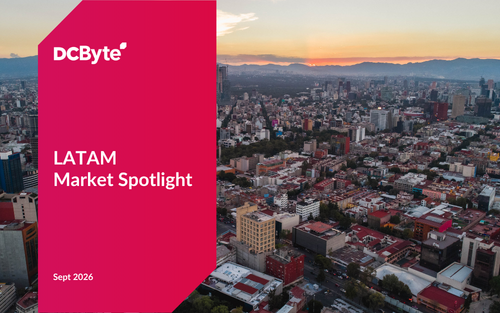
Get More Insight from Our LATAM Market Spotlight
Although Brazil is the region’s leading data center market, there’s much more to the LATAM ecosystem. Our latest market spotlight on LATAM outlines the key stories from the region, including:
- The regional outlook for LATAM, including why its total IT capacity has risen tenfold since 2021 and how it compares to other emerging markets
- Market commentary on the region’s three leading hubs in Brazil, Mexico, and Chile.
- Where the region’s next wave of data center growth is coming from, with commentary on small but growing hubs in Peru and Colombia
- What growing interest from international operators and hyperscalers, along with the addition of large AI campuses to the region’s pipeline, means for the future of the market.
Whether you are planning investment, market entry, site selection, operator strategy, or supplier targeting, our LATAM report gives you the insight needed to understand where growth is happening, what is driving it, and which markets are best placed to deliver.
Download DC Byte’s LATAM Market Spotlight for the full analysis.
If your planning depends on separating announced capacity from deliverable capacity, you need better visibility on data center markets, not bigger bets. Book a demo with our team to explore our Market Analytics, where we capture global data centre capacity by market and development stage.
Related Posts




















































































BOOK A DEMO
Discover the Global Data Centre Landscape
Join industry leaders using DC Byte to track infrastructure across 135+ countries.